‘There is a great temptation to explain away the intrinsically incredible by means of liberal rationalisations. In each one of us there lurks such a liberal, wheedling us with the voice of common sense. The road to totalitarian domination leads us through many intermediate stages for which we can find numerous analogies and precedents. The extraordinarily bloody terror during the initial stage of totalitarian rule serves indeed the exclusive purpose of defeating the opponent and rendering all further opposition impossible; but total terror is launched only after this initial stage has been overcome and the regime no longer has anything to fear from the opposition.’
— Hannah Arendt, The Origins of Totalitarianism, 1951
Table of Contents
- The Return of Fascism
- Eternal Fascism
- The Fascist State and Human Rights
- Fascism and the Decay of Capitalism
- The Psychological Structure of Fascism
- From Kitsch to Woke: The Aesthetics of Totalitarianism
- Fascism, Neoliberalism and the Left
- The Camp as Biopolitical Paradigm of the State
- The New Totalitarianism
- Humanity in Dark Times
10. The New Totalitarianism
It is a contradiction worthy of consideration that few in this country have any remaining belief in the integrity of one of the most corrupt Governments and untrustworthy Prime Ministers in modern British history; and yet the overwhelming majority of the population found a reason to believe and obey the 582 coronavirus-justified Statutory Instruments this Government made into law with little or no oversight by our elected representatives in a Parliament that has shown itself to be the worst in living memory. This spirit, or principle, or source of the law above those who made the thousands of regulations that suspended our rights and freedoms for two years has taken many and various forms, differentiated largely by class and party allegiance. For conservatives it’s been pride in Britain and its ‘world-beating Test and Trace system/race to develop a vaccine’ (etc); for middle-class liberals it’s been a professional’s trust in the ‘apolitical’ judgement of the technocrats in SAGE; for the Left it’s been an opportunity to point to other countries imposing stricter restrictions as a model of government to which we should aspire; for the woke it’s been a chance to sacrifice their individual freedoms in public for the ‘common good’; and for the working class it’s been the threat of arrest, fines and the courts. Indeed, the vast majority of UK citizens went beyond mere obedience to the letter of the laws that few of them had read, and subsumed their own will into the spirit that each, according to their own interests, identified behind them.
Today, however, the consequences of their more-than-obedience are becoming too unavoidable and terrible for all but the COVID-faithful to deny. Countries that were locked down for two years while trillions were injected into a collapsing financial system are now facing spiralling inflation and economic depression; the children kept masked and in a state of terror are showing the mental toll of bearing the brunt of their parent’s compliance; the poison injected into billions is leaving a trail of permanently injured and dead; the governments that temporarily suspended coronavirus-justified regulations in March are already threatening to reimpose them on a permanent basis; the number of billionaires in the world is increasing in direct proportion to the 250 millions that are being driven into extreme poverty; and the programmes and technologies of biosecurity are expanding the surveillance and control of international technocracies over our lives without even the pretence of averting a threat to public health. Given which, how should we address those who obeyed the regulations and continue to be complicit in the crimes of the biosecurity state? Should we, even, try to communicate with those who contemptuously dismissed us as ‘conspiracy theorists’, and were willing to see us banned from participating in public life, including the means to make a living? If we should, by what categories of law and morality should they be judged and by whom? Most importantly of all, given the general moral collapse in the populations living in the global biosecurity state, how should we proceed to defend ourselves against the return of fascism not only in our politics, laws and culture, but in the servile obedience to authority and craven refusal to think of our fellow citizens? In the face of such willing collaboration with the new state apparatus of totalitarian domination, how do we continue to act, individually and with each other, morally and towards a future politics, in these dark times? Finally, who is this ‘we’ with whom I wish to speak — to them and with them — with the collective voice with which we must speak if we are to be heard?
1. The Right to Obey
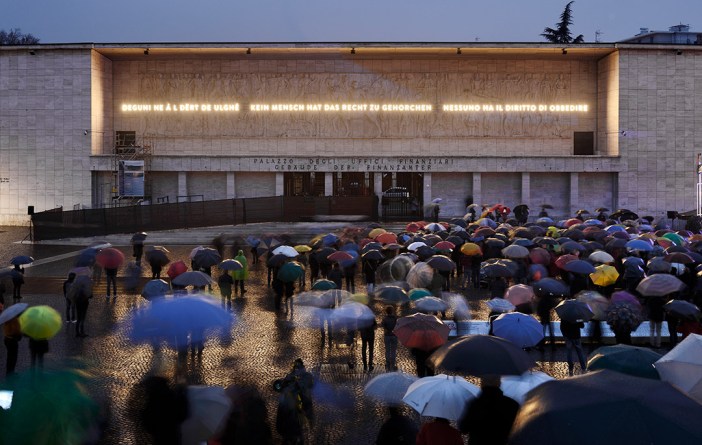
The Casa del Fascio in Bolzano, Italy, was completed in 1942 in South Tyrol, which was annexed from the Austro-Hungarian Empire after the Great War. The former seat of the local Fascist Party, its facade is decorated with a 36-metre bas-relief telling the story of The Triumph of Fascism. At the centre is a depiction of the Leader of Italian fascism, Benito Mussolini, on horseback giving the Roman salute; and between the horse’s legs, somewhat awkwardly, is carved the fascist motto: ‘Credere, obbedire, combattere (Believe, obey, fight).’ For years this was the object of protests by German-speaking Tyroleans, less for its celebration of fascism than because of Mussolini’s suppression of the German language in the region’s schools, newspapers and from official use. Although the building was owned by the state, who turned it into the State Financial Offices of the South Tyrol, it took until 2011, 68 years after the official fall of Italian fascism, for Silvio Berlusconi’s Minister for Culture, Sandro Bondi, to agree not to remove the bas relief but to an intervention that placed it within its historical context. When this finally materialised in 2017, it took the form of neon letters placed over the bas-relief but not obscuring either it or the fascist motto, carrying a quotation from the German-Jewish political theorist, Hannah Arendt. Despite over a century of Italianisation, South Tyrol is still a majority German-speaking population, and Arendt’s original German is placed at the centre of the relief, translated on either side into, respectively, Italian and Ladin, the minority regional dialect. The German reads: ‘Kein Mensch hat das Recht zu gehorchen (No man has the right to obey)’.
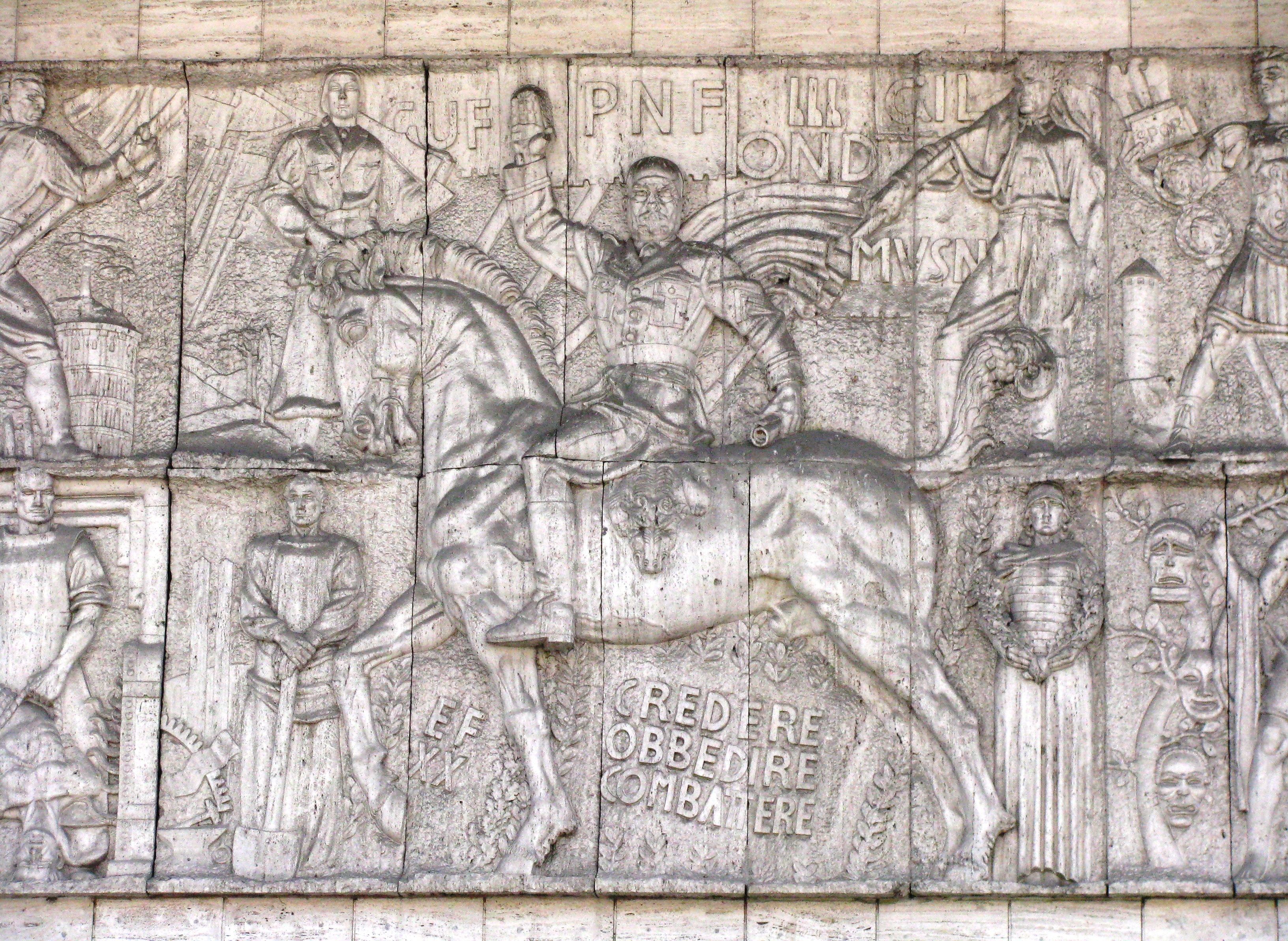
The quote comes from an interview in 1964 in which Arendt, who the year before had published her book, Eichmann in Jerusalem: A Report on the Banality of Evil, commented on the SS-Obersturmbannführer’s defence of his part in the transportation of Jews to the death camps with the claim that the guiding principle of his life was what the German philosopher of the Enlightenment, Immanuel Kant, argued was our duty to obey the law. For Adolf Eichmann, obedience to the commands of the Führer, which in the Third Reich had the status of law, was the principle of his own will. In her book, Arendt had reported that Eichmann, despite affecting a level of intelligence and culture he deemed appropriate for a member of the SS elite, had not finished either secondary school or his attempted training as an engineer, and constantly spoke in clichés, officialese and other inherited figures of speech in order to conceal what she heard as his inability to think for himself, or indeed from the standpoint of anybody else. Although Eichmann claimed to have read Kant’s Critique of Practical Reason (1788), in quoting the central concept of his moral philosophy — the categorical imperative that must be obeyed in all circumstances — Eichmann, Arendt argued, had ignored the importance to Kant’s moral philosophy of man’s faculty of judgement, which rules out blind obedience. For Kant, the legislator is not the head of state, fascist or otherwise, but the moral self at the moment one begins to act. Not only those with juridical powers over others, therefore, but all people must be legislators; and the categorical imperative must function not as a moral justification for subjecting others to the laws of the state, but as a universal law applicable to all.
Arendt’s response in this interview to Eichmann’s defence was itself a paraphrase of a passage from Kant’s Religion within the Bounds of Bare Reason (1793), in which he commented on Acts, 5: 29, where the Apostles are put on trial:
‘The saying “We should obey God rather than men” means no more than that, should the latter command something that is intrinsically evil (that is, directly contrary to the moral law) they may not and should not be obeyed.’
For Kant, the moral law transcends man-made laws, and can only be established through judgement founded on practical reasoning. As an example of which, no one can rationally claim the freedom to kill others with impunity as a universal law, because in practice he himself would be subject to the same freedom of others to kill him. Arendt’s paraphrase, however, adds something more to Kant’s statement. She does not say that man has the ‘right to disobey’, which would, as it were, add disobedience of the law to the list of human rights. Such an addition would undermine the rule of law with which human rights attempt to create a legal framework for justice. The right to disobey may sound like a declaration of freedom in the mouths of student rebels, but in practice it would mean the rule of the strong and the violent. Instead, Arendt says that unthinking obedience to the law is not free from responsibility, and even from criminal prosecution for the consequences of our actions, on the grounds that we owed obedience to our professional, legal or political superiors.
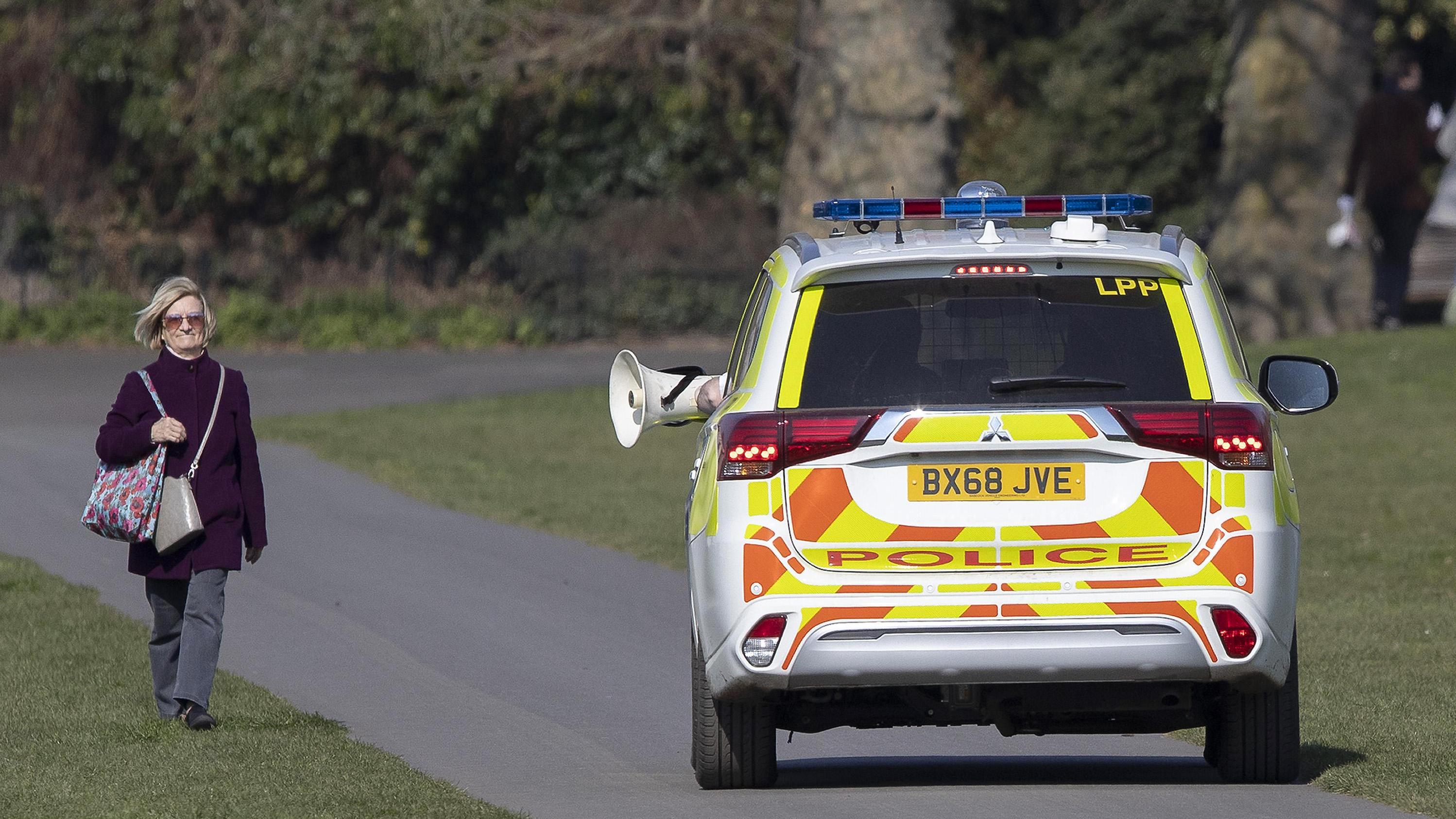
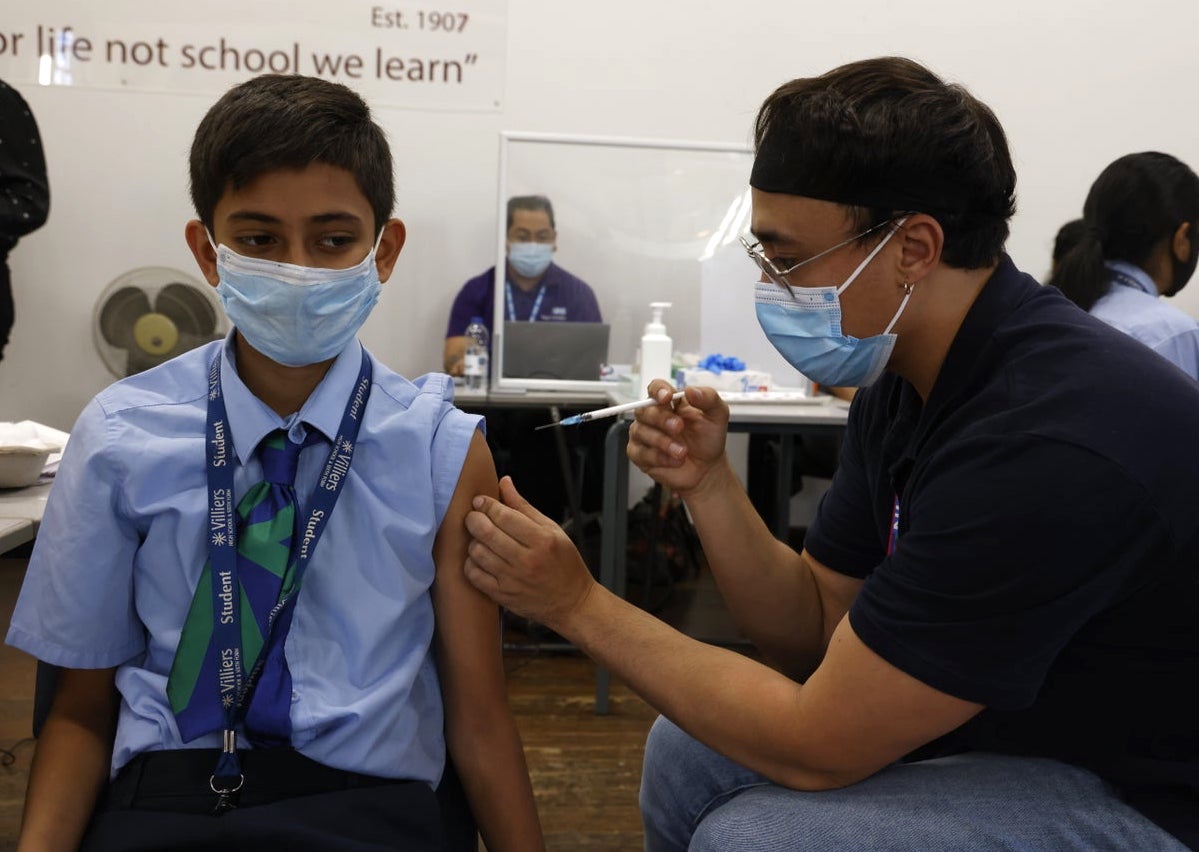
I do not refer here to the enforcers of biosecurity, either the police or designated ‘COVID marshals’, who as functionaries of the state are above the laws they claim to enforce, and who throughout the ‘pandemic’ have restricted our rights and freedoms far beyond even their newly-made legal powers to do so. Nor do I refer to those responsible for making and justifying those laws, whether Secretaries of State and Cabinet Ministers or the senior members of the Scientific Advisory Group for Emergencies, the National Health Service and the UK Health Security Agency, all of whom, in different measure, are responsible for decisions with such far reaching and catastrophic consequences that no court in the UK could judge them, but which possibly amount, in the absence of a declared war, to crimes against humanity. My concern here, rather, is with those millions of citizens who, acting on their own conscience, willingly complied with, and thereby enabled the otherwise impracticable imposition of, the UK biosecurity state in two long years of cowardice and compliance. Medical professionals who continue to inject the population with experimental ‘vaccines’ that are still in clinical trials whose terrifying data is only now being publicised, and which were only officially approved for temporary authorisation under changes to existing legislation justified by a politically declared state of emergency, will no doubt claim that they were and are following orders and the judgement of their superiors in the MHRA, the NHS and the pharmaceutical industry; but their failure to exercise their judgement, as professionals but above all as moral individuals, will not relieve them from responsibility for the thousands of deaths and injuries to unknown millions that followed the injections they administered.
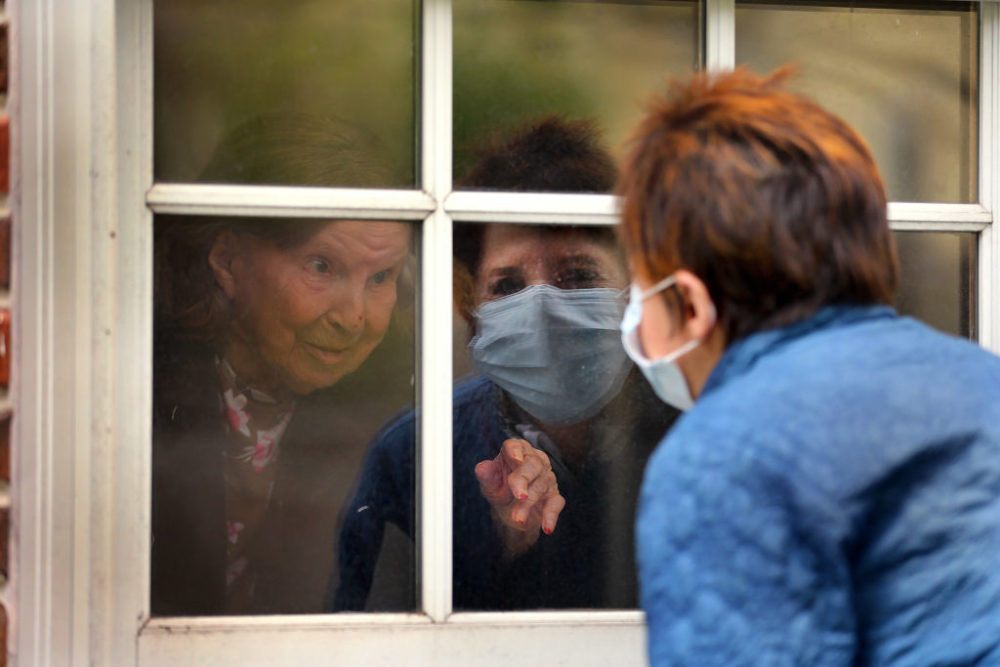
The same applies to care-home workers who kept their charges, the majority of whom had dementia, isolated in their rooms for months on end, leading to the appalling mortality rate in care homes during lockdown. And to educational staff who kept children in their care masked, terrified, guilt-ridden, socially distanced from each other or even banned them from school altogether at an age when months feel like years. And, more generally, to the millions of individuals who refused to serve, or to admit, or to continue to employ, or to speak to, or who denounced to the authorities anyone who didn’t obey the regulations of biosecurity, whether that was wearing a face mask, or standing at a designated distance from others, or not entering or walking or sitting in proscribed places, or getting tested, or complying with contact tracing, or being injected as many times as they were ordered. And, perhaps most of all, it applies to those who, in person, or online, or in newspapers, or on radio, or on televised talk shows, or on news programmes, or in Parliament, demanded the full force of the rapidly expanding reach of the law and its ever increasing powers of punishment against the non-compliant, not only with censorship and fines and incarceration but with bans from public life that included the right to travel, to education, to healthcare, to employment and, eventually, the right to remain at liberty. These, too, will claim they were obeying the orders of their superiors in their respective industries, their leaders in local, civic and central government, or what some celebrity, or poster campaign or nice-looking man on the television told them. But in moral matters, there are no superiors, neither government nor state, law or duty. However much the circumstances may extenuate them in the eyes of the law, each of us is answerable for his or her actions, and none can escape the responsibility for their own moral judgement. This is what the neon words on the Casa del Fascio mean.
Within three years of them being turned on, however, Giuseppe Conte, the Prime Minister of Italy since 2018 — and himself a jurist, former professor of law and member of the Italian Bureau of Administrative Justice — placed Italy under lockdown. The greatest suppression of constitutional rights in the history of the Italian Republic since it was founded in 1945 following the fall of fascism was implemented through prime-ministerial decrees issued under a politically-declared state of emergency. The first government in the West to do so, this juridical and medical model was soon followed by almost every Western government when it became apparent that their populations had been sufficiently terrified by the corporate media to obey. It quickly became apparent that, rather than recalling Arendt’s insistence that no man has the right to obey commands that go against the moral law, almost everyone was happy to believe the lies of their leaders, to obey the removal of their constitutional rights, and to join in the imaginary fight against a threat that never existed outside the stories about the ‘War on COVID’ told every day and to fantastical lengths by our governments, the media, the health industry, information technology companies and the organisations of global governance they form. In February 2021, in the face of criticism over the catastrophic economic effects of a year in lockdown, Conte resigned and the President unilaterally appointed Mario Draghi as the new Prime Minister, with the task of forming a technocratic government. The former Governor of the Bank of Italy and President of the European Central Bank, Draghi immediately reimposed the temporarily lifted lockdown, and in October of that year Italy became the first country in the world to require the EU COVID certificate of ‘vaccination’ — popularly known as the ‘Green Pass’ — as a condition of employment for the entire national workforce. This was soon extended to participation in all recreation activities, and the following year injection was made compulsory for those over 50 years of age, with a fine of €1,500 for non-compliance. Fascism, and not Kant’s categorical imperative that every man be the legislator of his actions, is the order under which we have lived in the West ever since.
2. The Moral Collapse
In December 2021, with the threat of vaccine passports and the re-imposition of lockdown looming, the division in the UK between the ‘vaccinated’ and those who had refused outright or were deemed to be insufficiently ‘vaccinated’ was at its highest. For two long years, the obedient had sat at home as the elderly, reduced to the legal status of bare life, were abandoned by the state to die alone in care homes, had put the health and lives of their own children at risk for the sake of a summer holiday when ordered to do so, then willingly injected themselves with experimental ‘vaccines’, and yet still they were in chains. And now they wanted revenge — not on the Government they had obeyed but on us, the non-compliant. Three months later, with the temporary repeal of the cultic practices of the biosecurity state precisely two years after they were first imposed by the Coronavirus Act in March 2020 — whose two years’ expiry date had been written into Section 89 with remarkable foresight — the COVID-faithful were having to confront the extent of their gullibility, their political naivety, their susceptibility to manipulation by the corporate media, their ignorance of elementary biology; and like all religious fanatics awakened to rude reality, it wasn’t pretty. Demanding evidence of the medical justifications for which they had substituted religious conviction for two long years, they were now forced to confront the truth of the lies on which their beliefs were founded: that their publicly displayed ‘virtues’ were nothing more than craven obedience to the cynical use of power; that the so-called ‘medical measures’ they slavishly obeyed were nothing more than the demonstration of the extent of their subservience to authority; that the legal enforcement of ‘coronavirus regulations’ and the exaggerated punishments for breaking them were the whims of politicians laughing up their sleeves at them at drunken parties in Downing Street; that they had sold two years of their children’s lives, watched their parents slowly die from another room, and injected poison into their own veins and that of their family to enable one of the greatest transfers of wealth from the poor to the rich in history; that everything they had denounced so confidently and with such contempt as ‘conspiracy theories’ had been implemented with an equally contemptuous lack of deception, and was now threatening to crash through the windows of their frightened middle-class world.
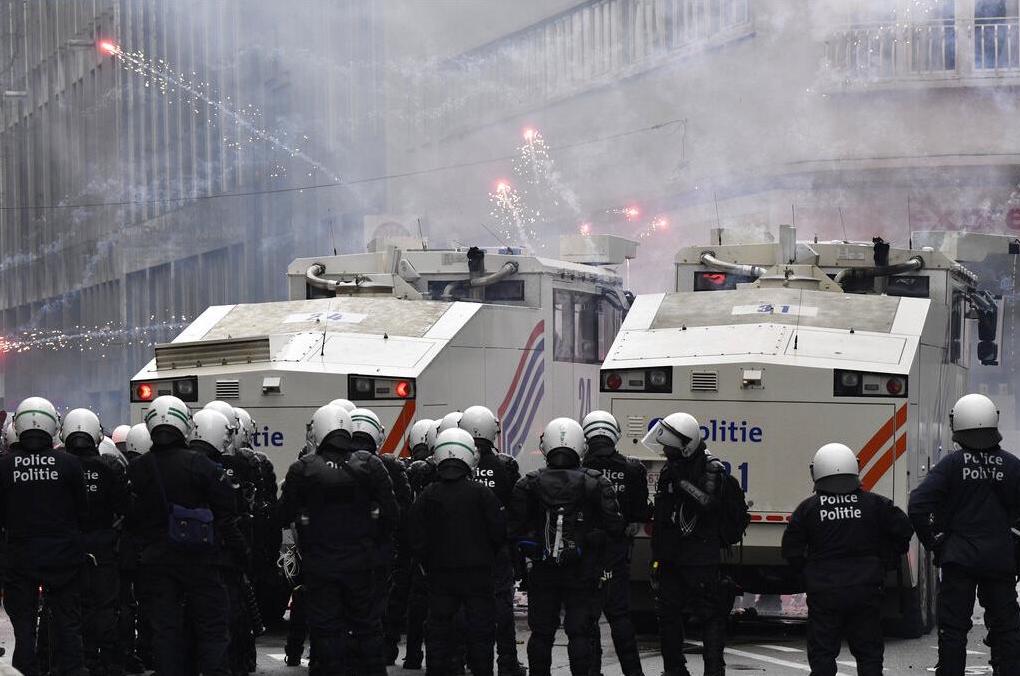
So how are those who have behaved like willing slaves for two years reacting now, as they begin to find out just how duped they were? The answer, of course, is as the middle-classes always behave: with new moral declarations of allegiance to what they know in their hearts if not their made-up minds was the biggest lie in modern history; with new declarations of support for the brutality of paramilitary forces enforcing the same restrictions in countries further down the road to fascism; with arrogant declarations that what really matters is the apparently completely unrelated legislation that is making permanently into law what coronavirus-justified regulations imposed on a temporary basis; with chants of ‘my body my choice’ at rallies protesting the US Supreme Court’s overturning of Roe vs. Wade and the right to abortion by liberals demanding those attending are ‘vaccinated’; with the distraction of the threat of war with Russia and their renewed chance to mount, once again, the battlements of Leftist irrelevance and start protesting about sovereign states and national autonomy and the abuse of human rights in foreign countries. Without shame or the slightest hint of self-awareness, they obediently repeat the declarations about rights and freedom and democracy from the heads of Western governments who, at the beginning of the year, had unleashed the paramilitary weapons of their police forces against their own people.
Like that preceding the triumph of fascism, this intellectual cowardice, of which the coronavirus ‘crisis’ has been the triumphant demonstration, has been many years in the making. 2022 is not only the hundredth anniversary of fascism forming its first government in Italy but also, not coincidentally, of the Annus Mirabilis of modernism, at least in the English-speaking world, with the publication of James Joyce’s Ulysses, T. S. Eliot’s The Waste Land and Ludwig Wittgenstein’s Tractatus Logico-Philosophicus — to which I would add the beginning proper of Ezra Pound’s Cantos. Besides its authors being Irish, American and Austrian, this is, of course, an artificially frozen moment in the history of modernism in literature, art, philosophy and music that had been initiated in Europe more than a decade before, and in painting and poetry fifty years before that, and which, by the time it ended — let’s say for argument in the 1970s — could make some claim to being matched only by the European Renaissance in imagination, brilliance and achievement. Yet all this appears to have been forgotten today, willingly erased from our memory and practices. Does art even exist anymore? It’s death-knell has been sounding for over a century, yet when the time came to lower its body into the ground and the tombstone laid reverently but firmly over its last resting place, it has instead been tossed onto the bonfire of capitalism like so much litter. As for the great emancipatory philosophies and movements of the Twentieth Century — communism, existentialism, poststructuralism, feminism, post-colonialism, black power, gay liberation — they have all been discarded for the radical conservatism of identity politics and its fascist offspring, woke. We live in a theatre in which Beckett was never staged, in which Kafka’s writings were never saved from the flames, in which Foucault never excavated the discourses of biopower, in which Agamben is slandered and censored by the new burners of books. The greater our advance into the technologies and programmes of totalitarian control, the more rapidly our ability to understand and resist them has been discarded, until all we have left is the puritanism and show trials of political correctness, in which snap moral judgements have supplanted discursive thought.
In the formation of this totalitarian kitsch, the middle classes, liberals, academics, artists, writers, and the shambles of the Left, have all been complicit. In the previous chapters I have attempted to analyse the historical, political, economic, ideological, cultural and even psychological formation of this new force of social homogeneity and conformity in the West, which has emerged as the model of citizenship in the global biosecurity state. Here, however, my interest is in judgement of their culpability. Over the past two years, the political parties, radical organisations, trades unions, socialist, communist and anarchist groups, left-wing journals and liberal newspapers, and what passes for an intelligentsia in this most anti-intellectual of countries, have either remained silent or declared their servile allegiance to the greatest transfer of money from the public to the private sector on record, the greatest increase in the power of the political establishment since the neoliberal revolution four decades ago, the severest restrictions on our human rights and freedoms in modern history. Not only do they present not the least resistance to the hegemony of state kitsch and woke law as the new orthodoxies of the global biosecurity state, but they are now the enemies of its enemies, employing the language of critique developed over a century of modernism not to question and challenge power but to entrench its authority further in the apparatus of the state and denounce those who dare to oppose it. It is on their complicity with power, their intellectual and moral cowardice, their bad faith and collaboration, that the biosecurity state has been constructed.
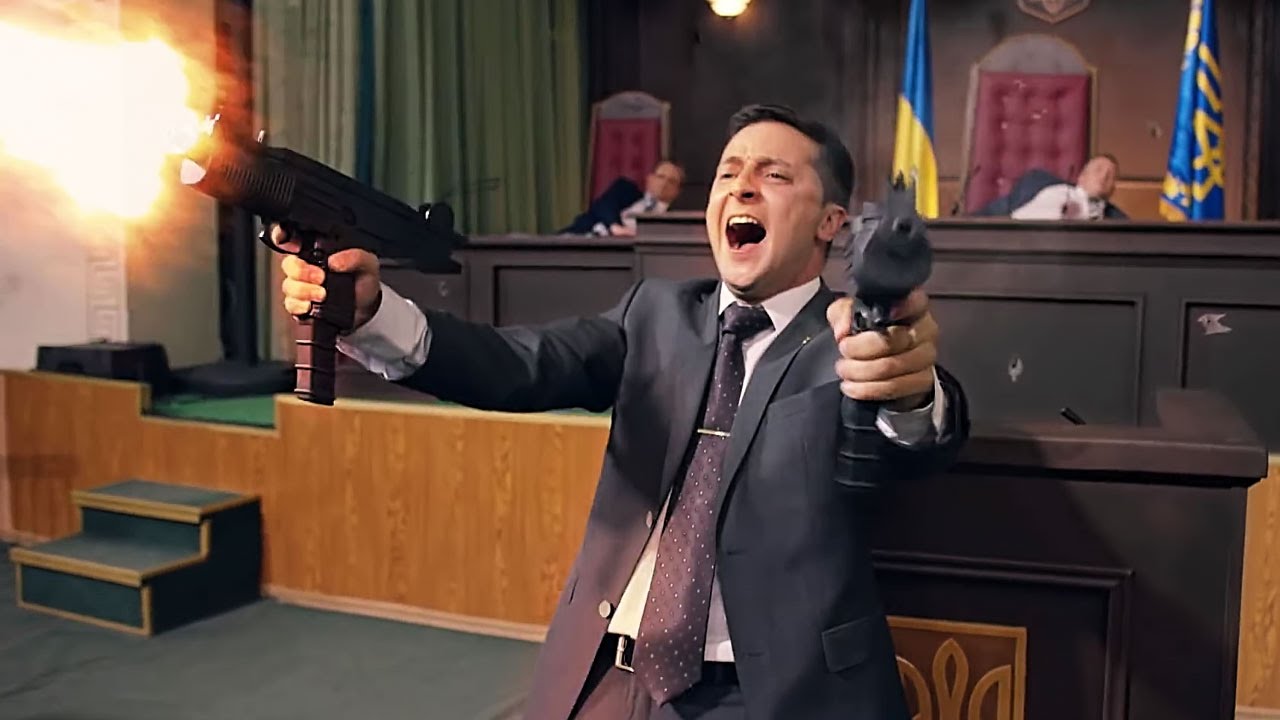
And now, as it creeks into action on the world stage, they have emerged from their hiding places to raise their hands in obedient salute to their new masters. War is the raison d’être, the justification for and inevitable outcome of fascism, and the COVID-faithful in social media’s auditorium, who had almost fallen silent in doubt and fear as the curtain was drawn back on the scenes of state violence and totalitarian control in Canada, Austria, Italy, Belgium, France, Lithuania, Australia, New Zealand and other theatres of fascism, haven’t hesitated to raise their clarion calls for Act Two in Russia. The fact that it’s a proxy war, waged by a puppet government installed by a US-engineered coup, at the head of a state that until recently was universally denounced as neo-Nazi, led by a former dance show contestant and professional comedian whose most famous role was playing the President of Ukraine in a soap opera, who has recently banned opposing political parties and media outlets and blacklisted critical journalists and academics, yet is now celebrated across the Western World as a champion of democracy and compared in the UK to Winston Churchill, is only the icing on the three-tiered cake of their extraordinary political naivety, their readiness to believe anything the media tells them, their complete denial of reality.
The world we live in — I take London to be representative of the fate of the West, as few places have been more colonised by capital, more subjected to the technologies of biopower — is not the real world. It is, to reference Jean Renoir’s 1937 film about class allegiances during the Great War, a Grande Illusion. But we are forced to live in this illusion, to labour in its factories of unproduction, to earn its grudging exchanges, to shop in its palaces of alienation, to meet under its intrusive gaze, for one simple though not exhaustive reason: because everything else — the real world and all it contained — has been stolen from us, including the land and all it once yielded, our common being with other lifeforms, our community with each other, for which it has substituted the unceasing ravages of capital. The sphere of ideology in which we wander as if in a nightmare is there to protect us from perceiving to what depths of servitude, stupidity and inertia the human being has been reduced. What is real, to adopt Jacques Lacan’s schema of the psyche, is what is most traumatic, threatening to pierce the cataracts of lies and self-deception that cover our transfixed eyes, the bad faith in which we live out our attempts to accommodate ourselves to the four walls of our windowless cell.
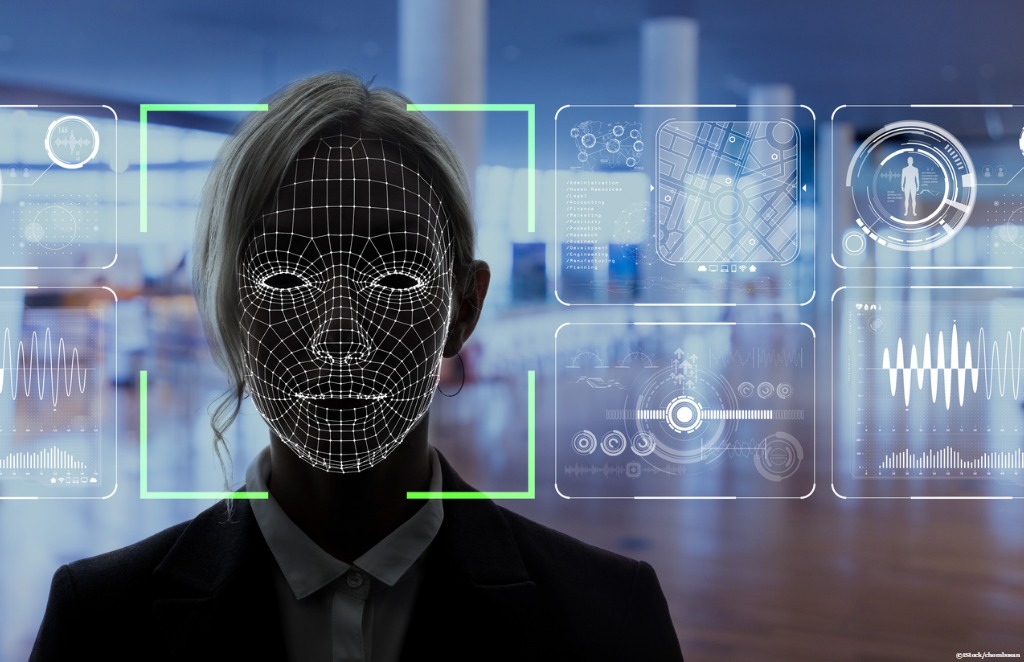
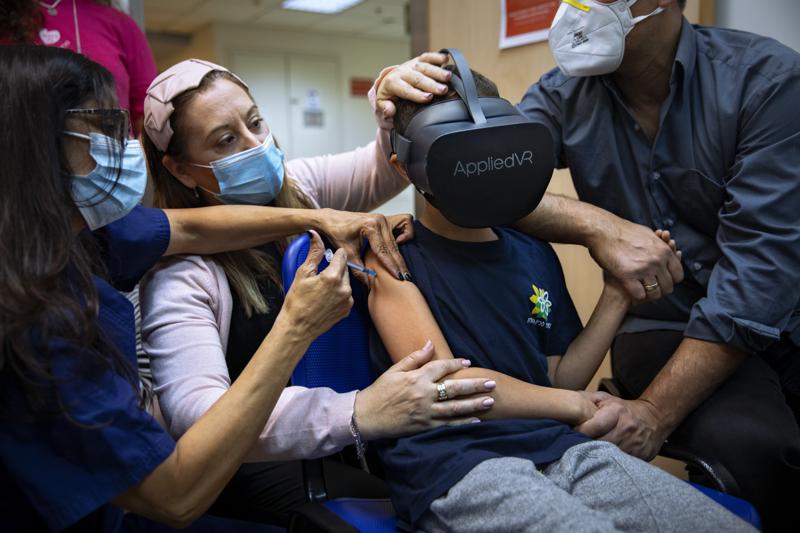
The mandatory blue masks that fill our garbage heaps and litter our oceans are only the latest and most blinding form of these cataracts. One day soon, if we continue on our current trajectory, the entire human face will be erased and only our bodies will remain, micro-chipped and quick-response-coded, their biometric data uploaded to a centrally-controlled Health Code modelled on that currently used in the People’s Republic of China, their movements and access to sustenance, care and housing, perhaps their very continuation as a living organism, contingent upon a global system of surveillance, monitoring, control, reward and punishment. The citizen of the nation state, with its imperfect freedoms and rights, will be reduced to the bare life of the digitally-augmented organism. As Hannah Ardent argued in The Origins of Totalitarianism, one of the goals and definitions of totalitarian domination is to make human beings, with our spontaneity, our initiative and our powers of judgement, ‘superfluous’ to the running of the state. This, above all that I have written about the biosecurity state, is the dream of fascism, which began a century ago with a discourse of degenerate races and diseased bodies, and proceeded to attempt to subsume the human being within the mass mechanised machine of the military. ‘Total War’, the watchword declared by Joseph Goebbels in 1943 as the Red Army began its long defeat of the Third Reich, was the fascist ideal long before it was imposed as a military policy, the realisation of its dream of total domination, in which every constituent member, every biological body and its every action, was subsumed within the totalitarian state.
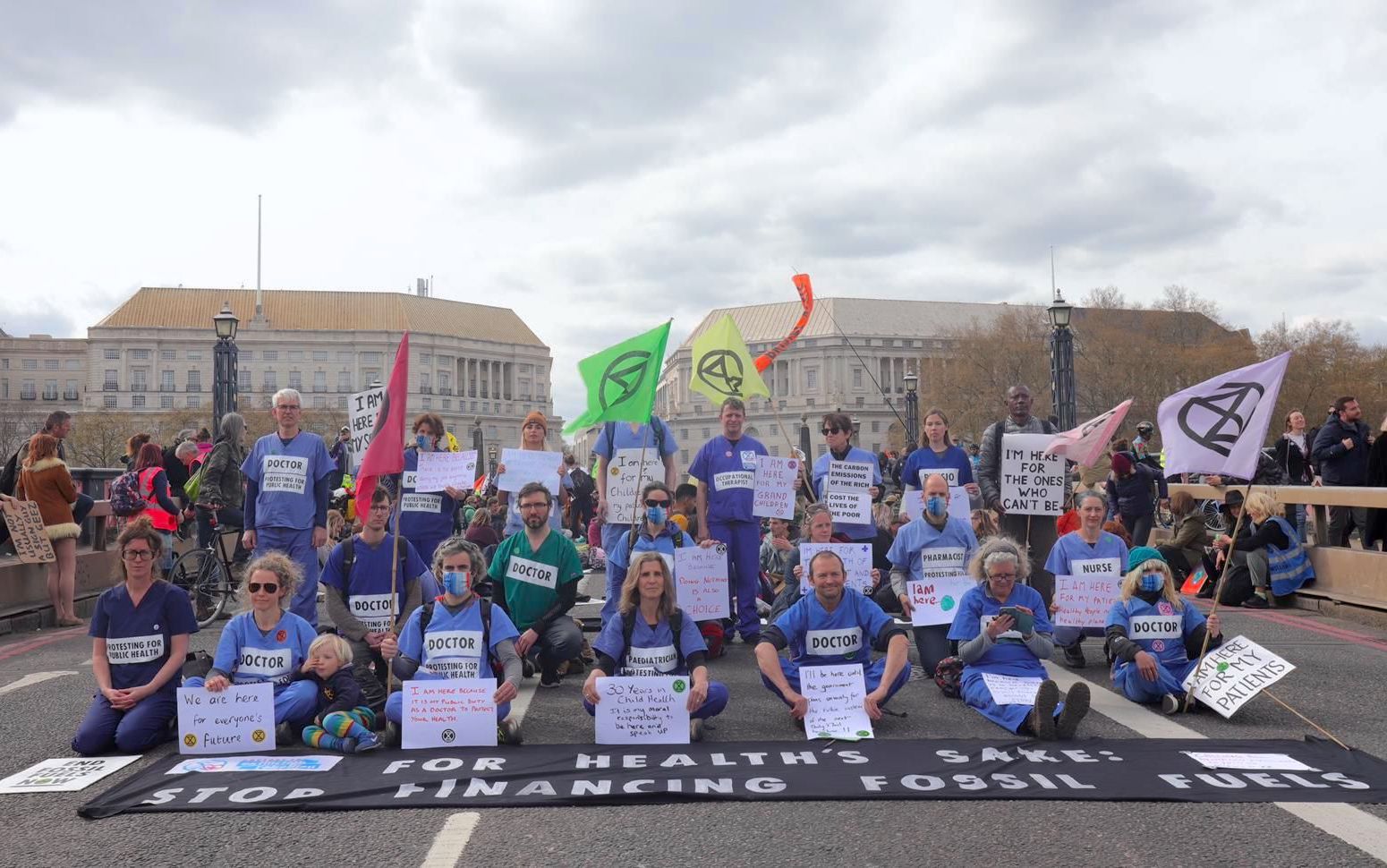
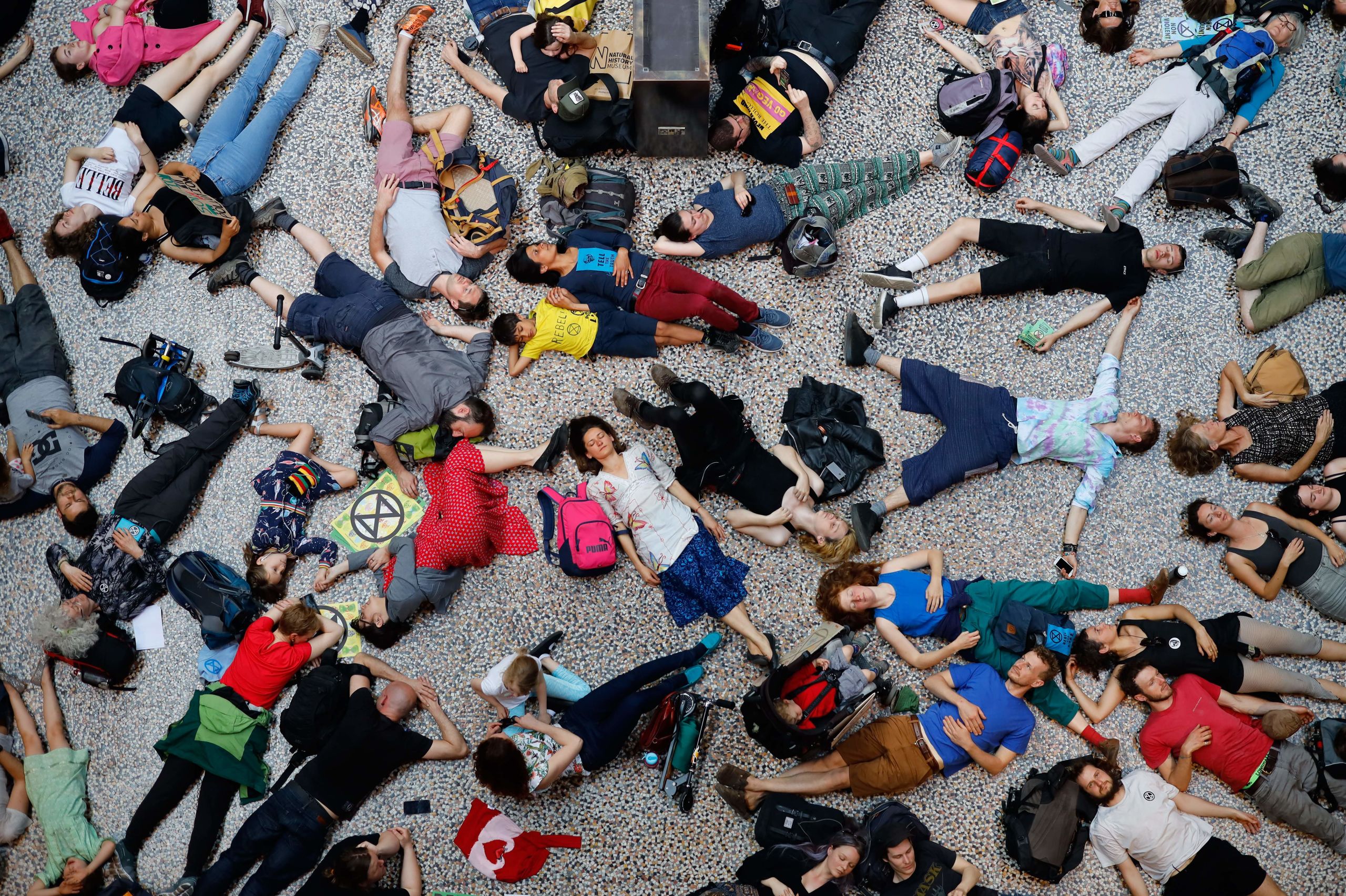
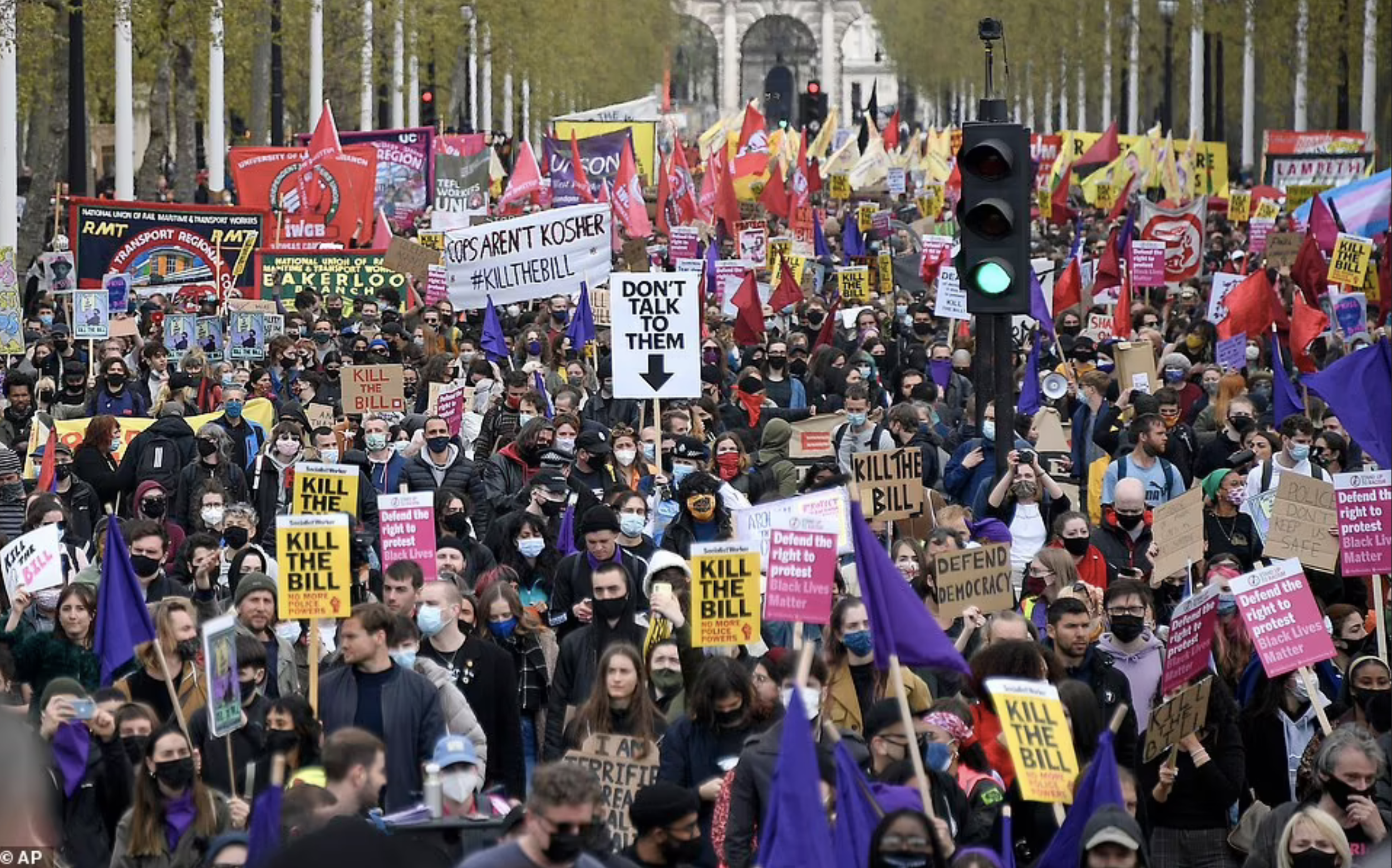
Perhaps the strongest argument, however, for the return of fascism as the ideological superstructure of the global biosecurity state is the abject cowardice shown by 95 per cent of the populations of Western nations over the past two-and-a-half years by people who, living for longer and in greater physical security and material comfort than any generation in history, have reacted to an imaginary threat to public health with a cravenness that can never be wiped from living memory as surely as it will be erased from the historical records, and which marks a significant downward step in our decline as a civilisation and perhaps as a species. As a child of parents who lived through the Second World War, I’ve always wondered what it was like to have come through the mechanised slaughter and madness. I know now that the overwhelming emotion was not one of relief that they had survived, or pride in those who helped ‘defeat fascism’ as they were told by their governments, or even horror at the unprecedented violence and ruin it had unleashed, but rather shame that, as a civilisation, the West had ever allowed such an obscenity to happen. I can imagine this shame because I see it all around me now. I see it in the belated re-emergence of the masked-up Left to protest against Government legislation removing our right to protest, because that’s all it’s capable of doing any longer in the wake of its collaboration with the biosecurity state. I see it in the triumphant return of Extinction Rebellion to our streets, declaring yet another ‘health crisis’, yet another ‘emergency’, telling us that we should all be ‘terrified’, and demanding ‘zero-carbon’ and that we ‘follow the science’ — as if the last two years has not revealed what such absolutist and religious rhetoric is serving. I see it in the pathetic conviction with which the COVID-faithful cling to their masks, plastic dividers, social distancing and the fourth, fifth and next dose of whatever ‘vaccine’ they’re told to take against whatever new virus or pox the media magics into existence. And I see it in the nostalgic longing with which the apostles of ‘zero-COVID’, led by the zealots in lab coats, point at the latest figures on hospital admissions in the hope that another lockdown will be imposed. Above all, I see this shame in the sudden and far too eager readiness of the Western world to resume its utterly bankrupt defence of human rights in the Ukraine. Indeed, I feel this shame myself every time I see another person wearing a face mask — the shame that a fellow human being in whom I recognise myself can so easily be haltered, tamed and ridden.
Or perhaps it is no more complex than observing that, having developed such total power over the populations of the West, why wouldn’t the global technocracy turn fascist, as it has with alarming rapidity and almost contemptuous ease? Last August I watched Ettore Scola’s 1977 film Una giornata particolare, this ‘special day’ being 4 May, 1938, when Hitler visited Mussolini in Rome. It was an all-too-familiar study of the unrelenting propaganda of the state and the willing collaboration of the masses that propaganda had formed, when being an ‘anti-fascist’ meant being an enemy of the state and being a fascist meant participating in public displays of blind conviction and moral righteousness. Seen from within the fascist state, it shows the interdependence of the unity of homogeneous society with fear of its real or imagined subversive elements, the poles of attraction to the Leader and disgust with the ostracised that bound the Italian people together, the role of state spectacles in creating and maintaining these polarities, the consensus of violence enacted against anyone who didn’t belong, let alone dared to resist.
All these are returning — have returned today — on a cultural palette wiped clean of memory and knowledge, in the wake of a general moral collapse in which behaviour contrary to the previous norms of liberal democracies and violating our former rights and freedoms has become the new civil norm. The culture, philosophy, thought, art, literature of the West over the past century appear to have been forgotten in a vast act of willed amnesia, and in its place have been erected the statues of an ersatz culture founded no longer on covert but on blatant and even celebrated acts of censorship, on equally blatantly manufactured and manipulated fear, on exacerbated and directed hatred against enemies within and without, on the suppression of disagreement in thought, speech and writing, on enforced acceptance of state orthodoxies hiding behind the plurality of opinion, on the authority of an increasingly militarised state power, on the punishment of apostasy without crime (what the Online Safety Bill calls ‘legal but harmful’), on pride in publicly-declared stupidity, on ignorance of even the immediate past, on the adolescent certainties of woke ideology, the state kitsch of totalitarianism. Orwell’s vision of the future in Nineteen Eighty-Four was of a boot stamping on a human face forever. If the new totalitarianism has an equivalent image, it is of a mask in which a plastic window shows the wearer’s smile, and which requires that smile never to fade.

In ‘Personal Responsibility under Dictatorship’ — the public address she delivered in 1964 in response to the furore touched off by her book on Eichmann — Arendt recalled that what had ‘morally disturbed’ her during the first years of the Third Reich was not the brutal behaviour of the stormtroopers or the blatant lies of the Nazi officials, but rather the ‘overnight change of opinion that befell a great majority of public figures in all walks of life and all ramifications of culture’ and the ‘incredible ease with which life-long friendships were broken and discarded’. Similarly, over the past two-and-half years it has not been the political behaviour of my enemies that has so disturbed me — for what else should we expect of those in positions of power except its abuse? — but rather the moral behaviour of those I had reason to believe were my friends or comrades, or in whom I could recognise some shared moral principles beyond our differences of political opinion or understandings of the world. All that has been sacrificed to the new ‘common good’ of biosecurity. And just as happened in post-war Europe, after the shame of collaboration have come the denials of complicity, the justifications for compliance, the blanket amnesia and the attempts to rewrite recent history in their favour. It took Germany a generation even to begin the process of coming to terms with its fascist past, and all it has produced is the hegemony of neoliberalism in Europe, a revisionist culture devoted to equating socialism with fascism, and a Holocaust industry that justifies, among other things, the apartheid State of Israel and the imperialism of the West. And for all the forced celebrations this March even among those who opposed lockdown and refused to obey biosecurity regulations, our World War is not over. Indeed, to quote the great class-warrior himself, this is not the end. It is not even the beginning of the end. But it is, perhaps, the end of the beginning. But the beginning of what? If the initial stage of totalitarian rule, as Hannah Arendt wrote, serves to render all further opposition impossible, now that impossibility appears to have been achieved and the global technocracies have nothing to fear from an opposition that never materialised beyond the largest protests in British history buried by the media and ignored by both Parliament and Government, how do we respond to the next wave of terror the global biosecurity state is about to release upon us?
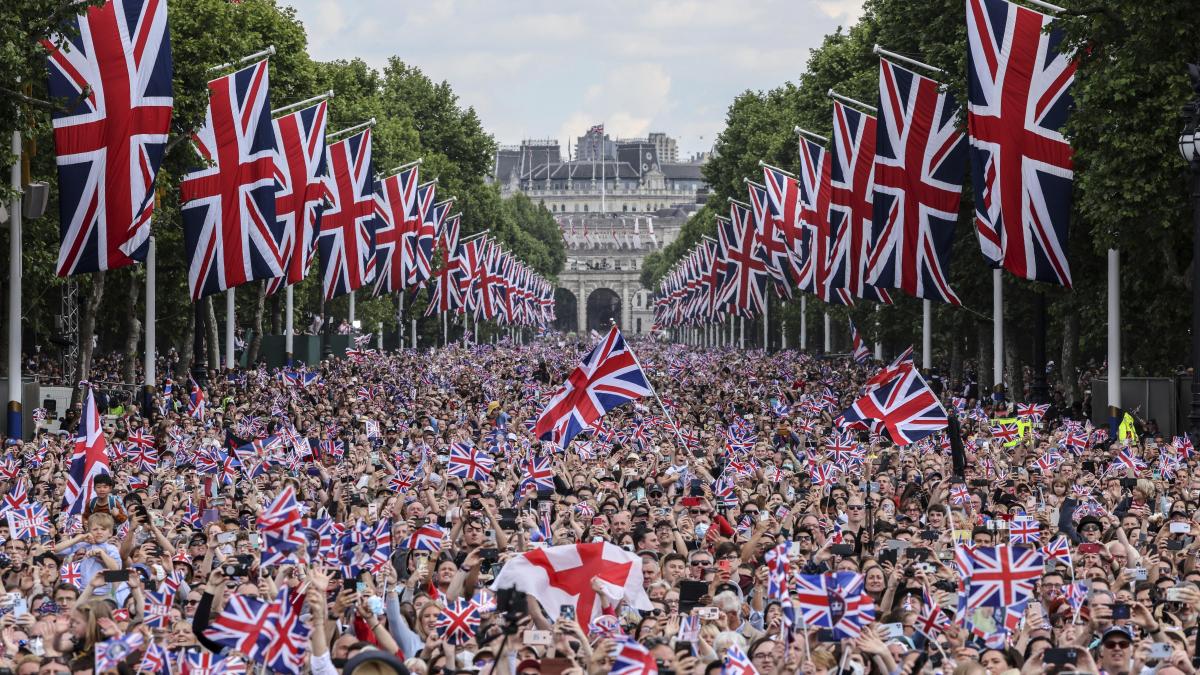
The recent sight of public figures who for two years stood up and voiced their resistance to the biosecurity state from a broadly libertarian standpoint — as distinct from the millions who were protesting against the managed destruction of their jobs and businesses — now tugging their forelocks in deference to the Queen at the obscene spectacle of the Platinum Jubilee, or participating in the spectacle of the Wimbledon tennis championships from which Russian and Belarusian players are banned, or declaring to anyone who will listen that local communities in London resisting immigration snatch squads intent on sending refugees to Rwanda threatens law and order in the UK, or complaining that striking rail workers are ‘holding the country to hostage’, or repeating Theresa May’s specious argument that — notwithstanding the fact that, over the past two years, the Bank of England has pumped £895 billion into the crashing financial sector while the Government spent £410 billion on lockdown — there’s no ‘magic money tree’ with which to pay immiserated workers, indicates how much of their resistance came not from political conviction but from its infringement on their personal liberties. Now those liberties have temporarily been restored, many of those who formed that resistance appear happy to go back to being the passive consumers of war, sport, royalty, patriotism, police violence and the media’s hatred of the working class. Like Friedrich Hayek, their definition of freedom is the personal freedom to buy and sell, to make money and spend it — the freedom of the entrepreneur and consumer. Their resistance, in other words, neither proposes an alternative to the periodic crises of finance capitalism that are paid for by the global working class nor forms an opposition to its new forms of totalitarian global governance. What they oppose is having their dream of a free market exposed for what it is: the bad faith with which the middle classes have excused forty years of neoliberalism so long as the benefits ‘trickle down’ to them while the gap between rich and poor widens.
As both Hayek and Orwell — and before them Trotsky — observed, historical fascism drew its converts from the impoverished middle-classes, whose fear and hatred of the working class made them ready to accept any political system that promised to save them from the same fate. Without an understanding that the global biosecurity state is the logical consequence of the financial and political monopolies created by forty years of neoliberalism and a global financial system built on credit, what chance is there that middle-class libertarians facing the greatest drop in their standard of living in generations will continue to bite the hand that feeds them? Is it the case, as Orwell predicted, that unless we create a socialist party with a genuinely revolutionary programme, this newly impoverished middle class will, to the contrary, form the cadre of the new fascism? History tells us they will. Indeed, they have already shown themselves only too willing to be the bureaucrats of the new totalitarianism.
And yet, in the name of a future politics whose foundation we cannot yet see, it is the fools who believed the Government, media and medical industry, the cowards who didn’t but obeyed everything they said anyway, and even the collaborators who hoped to benefit from both that we must continue to try to bring over to our side — the side of freedom, which will only be won in mass resistance to the global biosecurity state. We cannot repeat the catastrophic accusation of ‘social fascism’ with which the Communist International from 1928 dismissed every other party opposed to fascism, and in particular the Social Democrats, right up to and even past the election of Hitler to power in Germany in 1933, and which was only dropped as a policy when the Third Reich ruthlessly set about annihilating the Communist Party of Germany. Only in 1935, at the Seventh World Congress of the Comintern, was the ultra-left position of the Third Period finally abandoned and, in its place, Georgi Dimitrov announced the policy of bringing together opposition from across the political divides in a People’s Front Against Fascism. Within a year this policy brought Popular Front governments to office, however briefly and ineffectively, in France and Spain. In the UK, the Labour Party, fulfilling its historical role of suppressing any threat to capitalism from the working class, declined to form a Popular Front alliance with communists, liberals and even rebellious conservatives against the appeasement of Hitler by successive National Governments; and in the US the Socialist Party of America similarly declined the overtures of the communists. That these Popular Front governments ultimately collapsed in the face of fascist invasion and the betrayal of Republican Spain by Léon Blum’s French Government is only another in the long history of the failures of the Left. But if, today, fascism has once again taken political power in the West, it has done so not only with the help of the Left’s customary betrayals of workers in favour of its parliamentary aspirations, but this time with its willing and total collaboration. What in the 1930s was a tragedy that opened the catastrophe of the Second World War is being replayed today on a stage no less catastrophic for being implemented on the greatest farce in modern history. If a Popular Front government is ever to seize power in the future, it will have to start as a People’s Front formed outside the control of existing parliamentary parties, whose aspirations extend no further than finding a seat at the new table being laid by the international technocracies of the global biosecurity state.
It is becoming increasingly difficult — I am struggling to find reasons — not to call the political, juridical and cultural forces produced by this revolution in global capitalism ‘fascist’, and to describe the global biosecurity state these forces are imposing upon the West as ‘totalitarian’. As I argued in the previous chapters, the collaboration of Governments and Oppositions across Europe and the West has demonstrated for those of us still watching that Left and Right no longer exist as political positions in the global biosecurity state, and any opposition to it based upon this division only serves to entrench it further in our political system. If you’re on the side of the masked and armed police assaulting and arresting protesters demanding the return of their human rights and civil liberties, you’re on the side of the fascists enforcing the biosecurity state. If you’re on the side of the people opposing them, you’re on the side of freedom. The choice is as clear as it is unavoidable, and it’s for each of us to make alone and then form ourselves into a People’s Front against fascism. But what chance is there of such a thing happening? There is a world of difference between what needs to be done to bring down the new paradigm of global governance by which we are now ruled and the realities of resistance after forty years of neoliberalism; and calls for a revolution that exists only in the dreams and programmes of revolutionaries serve only to divide opposition and justify the lack of resistance to the most decisive and long-prepared revolution in modern history to a new form of totalitarianism.
3. A Novel Form of Government
Not every fascist state has been totalitarian — for Arendt, neither Franco’s Spain nor Mussolini’s Italy ever qualified as such; and not every totalitarianism has been fascist — with Stalin’s Soviet Union and Xi Jinping’s China being the primary examples; yet the evidence of the present is that the global biosecurity state will soon be both, if it is not already. For the first year-and-a-half of the coronavirus ‘crisis’, in the more than two dozen articles I wrote on the implementation and expansion of the UK biosecurity state and why and how we should resist it, I repeatedly warned that, with the removal of our rights, freedoms and politics and their replacement with the regulations and programmes of biosecurity, we were in danger of enabling the revolution of Western capitalism into a totalitarian society. Over the past year, however, when I have been able to reflect on where the previous two years have brought us, I have revised my opinion. It appears clear to me now that, in the UK and across most if not all of the West, we have been living in a proto-totalitarian society for some time, at least since ‘9/11’ and the colonisation of neoliberal democracies by the US model of the National Security State. What libertarians opposed to lockdown, Universal Digital Identity and ‘vaccine’ mandates refuse to see is that the model for the global biosecurity state is not only the Social Credit system of the People’s Republic of China but also, and primarily, the United States of America, whose financial services sector is its prime instigator and financier in the West.
When our every online search is used to build up a profile of our consumer interests, sexual predilections and political affiliations; when the record of our every consumer transaction is available to the highest bidder for undisclosed uses; when our faces are recorded at the checkout of every supermarket on the spurious basis of prohibiting theft; when every photograph of ourselves and our friends we have been foolish enough to post online is being used to build up a database for facial recognition technology covering the entire population; when those of us stupid enough to carry a Smart Phone have to comply with its scan of our own face in order to use its other facilities; when our presence in every street, alley, shop, office, civic building, train station, airport, sporting venue, housing estate and every other public space is recorded by a CCTV camera; when our ability to leave and enter the country is contingent upon being herded like cattle, treated like criminals and subjected to retinal scans and now DNA swabs; when we live under the threat of assault with impunity from one of the largest and most well-armed and equipped police forces in the world — I find it difficult to describe the society in which we have lived for the past twenty years as anything but the preparation of our laws, technologies and behaviours for the Great Reset, and therefore as pre-totalitarian. As Larry Fink, the Chairman and CEO of BlackRock, candidly remarked in 2011:
‘Markets don’t like uncertainty. Markets like totalitarian governments, where you have an understanding of what’s out there. Obviously, the whole dimension is changing now with the democratisation of countries. And democracies are very messy, as we know in the United States. In Northern Africa and the Middle East we’re going to have an uncertain environment for many years, until we have an understanding of where this is all going to take us.’
Ten years later he’s got what the financial sector wanted. Now that our right to protest against any Government policy or legislation is dependent upon the good will of an increasingly politicised and ideological police force; now that the state has denied us not only the financial means but even the legal right to challenge the decisions of the Government and other public bodies in the law courts; now that the corporate media has become the unified propaganda arm of the state tasked with censoring anything the Government judges to be ‘fake news’, including the consequences of its own legislation; now that our citizenship can be removed on the judgement of a Government Minister without scrutiny by our elected representatives in Parliament or judgement by the judiciary; now that corporate-funded ‘fact checkers’ dismiss as ‘conspiracy theory’ any criticism of both the corporations funding them and the governments they fund; now that our opinions on anything from politics, medicine and war to corporate transparency and the new cultural and legal orthodoxies of woke are subjected to scrutiny and erasure by social media platforms empowered by legislation to censor anything the Government considers ‘lawful but harmful’; now that our human rights are being replaced by the obligations of citizenship to the UK biosecurity state; now that our civil liberties are contingent upon compliance with the unaccountable decisions of organisations of global governance run by international corporations and the unelected technocrats of nation states; now that Universal Digital Identity carrying our biometric data is being made a condition of access to everything from travel, healthcare and education to voting, welfare and work; now that our currency is on the verge of being limited, programmed and linked to our carbon footprint and medical ‘status’; now that medical interventions on the cusp of being made mandatory will carry the technology to register compliance with whatever mandates the global health technocracy imposes; now that the opinions and publications of writers, academics and other researchers must comply with the official policies of the biosecurity state; now that all workers in contact with the public, including teachers, are compelled to undergo indoctrination into woke orthodoxy through programmes like ‘unconscious bias’ and ‘equality, diversity and inclusion’ training; now that parental consent is no longer required before the state makes experimental mRNA ‘vaccines’, puberty blockers and irreversible medical procedures available to children; now that journalists reporting from the Ukraine who do not parrot the Government’s narrative have their bank accounts frozen and their assets seized; now that police are using facial recognition technology to stop and search members of the public without cause; now that we can be arrested for posting a comment online that causes ‘anxiety’ or ‘offense’ to someone else; now that we are being herded into a system of Social Credit by which obedience to Government-dictated norms of behaviour and not merely the law will become a condition of citizenship in the biosecurity state; now that the biopolitical paradigm of the camp is being expanded into a permanent spatial arrangement of the state of emergency that will embrace the whole of society — it has become impossible not to describe the society in which we live now as totalitarian.
But what is totalitarianism? What I have described here is different from the criteria by which the political scientists, Carl Joachim Friedrich and Zbigniew Brzezinski, defined it in their 1956 book, Totalitarian Dictatorship and Autocracy. These included the following:
-
- Single political party, typically but not always led by a dictator;
- Single ideology, founded on loyalty to the state;
- System of terror, using violence and a secret police to control the population;
- Government monopoly on weapons;
- Government monopoly on the means of communication, including censorship and a state-controlled media;
- State-controlled economy.
Formulated ten years into the Cold War, these criteria have been used by Western critics ever since to denounce authoritarian socialist governments in order, as I discussed in chapter 7, to distract our attention from the West’s own collusion with authoritarian capitalist governments; but although many of them (particularly criteria 2-5) are not unrecognisable in the new form of governance emerging from the global biosecurity state, they are outdated as a description of the totalitarianisms of the Twenty-first Century, in which global technocracies and corporate monopolies of markets and governments in thrall to finance capitalism — and not authoritarian socialism — present the greatest threat to our freedoms in the West. What need is there for a single political party when the difference between parliamentary parties equally committed to crisis capitalism is in personnel and rhetoric and not policies or principles? What need is there for a state-controlled economy when, as I discussed in chapter 7, our economy is run by international organisations of global governance? As for the rest, woke, as I discussed in chapter 6, is the newly emergent and soon to be dominant ideology of the global biosecurity state; the system of terror used to control the population, as we have witnessed and obeyed for two-and-a-half years, is biosecurity; and the monopoly on weapons is not governmental exactly but, like our economy itself, administered by national governments on behalf of international arms dealers. As for our corporate-owned media, the ideological hegemony it has displayed in creating, manipulating and maintaining the manufactured ‘crisis’ in public health has never been witnessed before in the West, even during the professional wars we wage on sovereign states. Updated from the Cold War to the Civil War national governments are waging against their own populations today, the global biosecurity state meets each of these definitions of totalitarianism. But definitions require more than updating if we are to comprehend the new totalitarianism.
A far better definition of the particularity of totalitarianism as distinct from dictatorship, tyranny and despotism is provided by Hannah Arendt in The Origins of Totalitarianism, which although published five years before Friedrich and Brzezinski’s book, more accurately describes our present. Although, in its third volume, Arendt identifies the by now familiar criteria of replacing class differences with the politically indifferent masses, the emotional and irrational alliance formed between these masses and a charismatic leader, the role of propaganda in forming and maintaining this alliance in the face of reality, the resulting subordination of the individual to the state, and the role of the police in ensuring that subordination, in the second edition of her book, which was published in 1958, Arendt added a new concluding chapter titled ‘Ideology and Terror: A Novel Form of Government’. In this text, which was originally published separately in The Review of Politics in 1953, and in which she reflected on her larger study, Arendt laid out what was new and particular to totalitarianism as distinct from other forms of authoritarian government. And as one would expect of a political theorist of her calibre, Arendt’s reflections on the novelty of totalitarianism as a system of government have far more to tell us about the new totalitarianism being imposed upon us today. She divides the novelty of this form of government into four essential aspects:
-
- Obedience to the higher authority of a single idea
- Rule by terror
- Hegemony of ideological thinking
- Production of isolation and loneliness
Arendt’s text is so rich that it is difficult to summarise without losing much of its explanatory power, but I will try to confine my commentary to the elements that most illuminate our present and possible future.
1. Higher Authority
Arendt was neither a socialist nor a communist, and didn’t flinch from comparing the totalitarianism of the Third Reich under Hitler to the Soviet Union under Stalin, for which she was widely criticised by the Left. However, far from wielding power in the interests of one man, which is was happens under a fascist dictatorship like that of Mussolini, Franco or Pinochet, totalitarian regimes posit a higher form of authority irrespective of previously held conventions of right and wrong, and from which the laws made by man derive their ultimate legitimacy. For National Socialism, this higher authority was the laws of Nature, under which those born with a form of disability or who were designated as members of a degenerate ‘race’ were killed; while, for Soviet Communism, it was the laws of history and those classes that stood in the way of the ‘dictatorship of the proletariat’. Legally, this resulted in a state within the state by which the laws made by the executive, ratified by the legislature and administered by the courts to justify the crimes of the totalitarian state were constantly broken and made redundant by the declarations and actions of their leaders. In Nazi Germany, Hitler’s words had the status of law the moment he spoke them; while in the Soviet Union, the constitution adopted in 1936, which guaranteed various rights, freedoms and democratic processes, was almost immediately made redundant by Stalin’s purges of the party, army and ethnic minorities over the following two years. In both regimes, however, the leader was the embodiment of this higher authority, whose laws it was the function of the population to realise, if necessary by their death. In the Third Reich, therefore, it was the laws of Nature and not man that justified the extermination of Jews, Poles, Slavs, gypsies, homosexuals and other ‘undesirable’ social elements; while in the Soviet Union it was the laws of History that justified the enforced famines, the purges and the gulag.
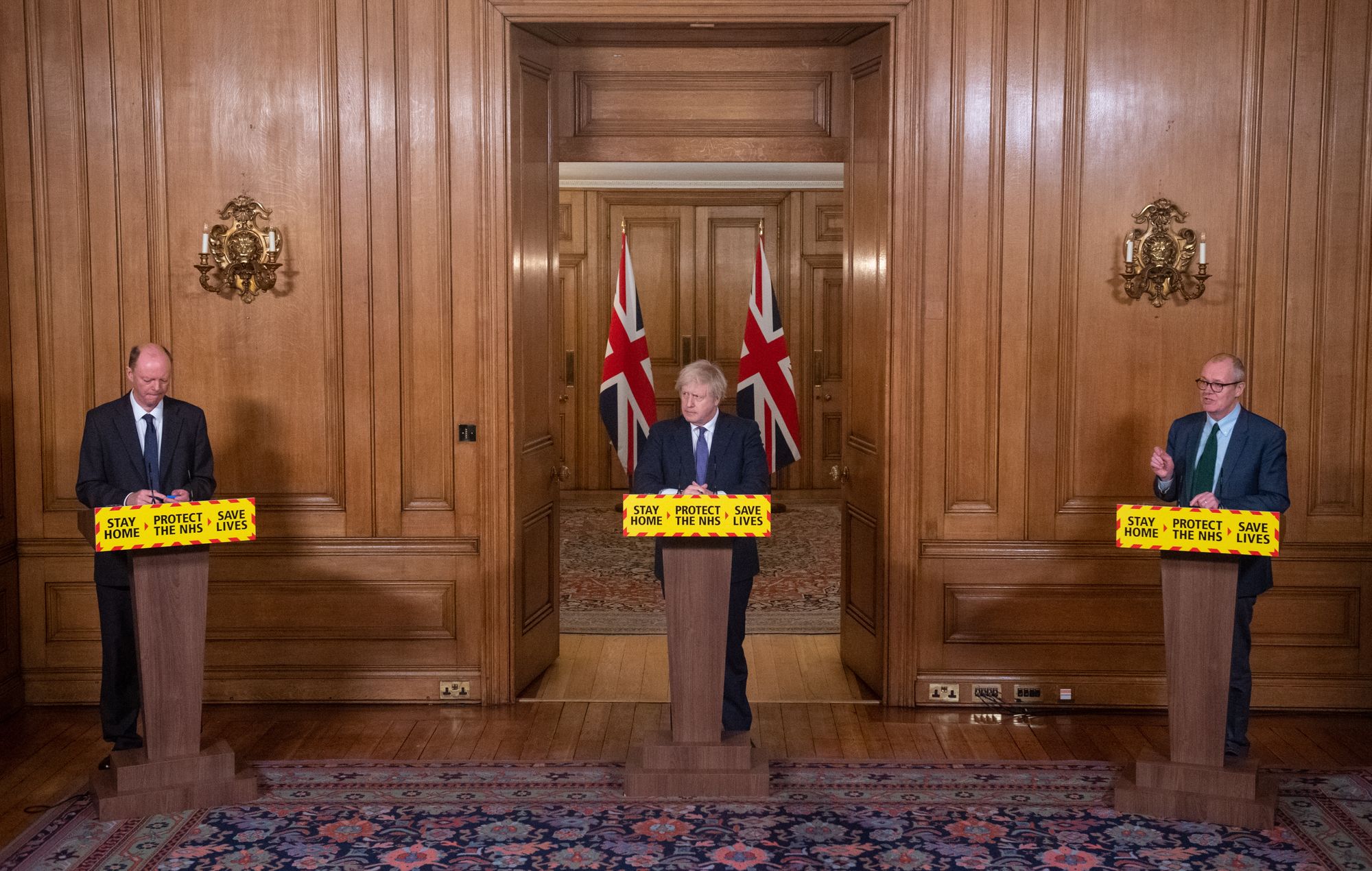
To these two abstractions, which took the place of religion in these officially atheist regimes, it was predictable that the laws of an equally abstract Science, which today has attained the same religious status across the West, would justify the totalitarianism of the global biosecurity state. As I discussed in chapter 5 on the psychological structure of fascism, the COVID-faithful are as obedient to this apotheosised Science as communists and National Socialists were, respectively, to History and Nature. It is a matter of record that, so rapidly and without justification or scrutiny were the 582 coronavirus-justified Statutory Instruments made into law at a rate of 6 per week in the UK that not even jurists were able to say at any one moment what was proscribed by the thousands of regulations by which a UK citizen could be fined or arrested. It was, therefore, as I stated at the start of this chapter, to the ideology of biosecurity, a new and legally undefined term in the West, that individuals attributed the source, the principle and the spirit of the man-made laws which few had read and fewer still understood. Indeed, the police forces tasked with enforcing this daily legislation openly stated that they did so not on the contents of the laws they are paid to officiate, which they complained were too numerous and changeable to follow accurately, but on what they decided were their spirit. In response to criticisms made by Jonathan Sumption, the former Justice of the Supreme Court, that the police were acting beyond their legal powers in enforcing lockdown restrictions on our freedom of movement, the Chief Constable of the Greater Manchester Police replied that during a crisis the police are free to do what they think is fit. Sumption accurately described this as the definition of a police state. In effect, the declarations made at the Government press-conferences that were held every day by a Minister flanked by scientists from SAGE and televised to the nation before their contents were even presented to Parliament had the force of law. But the unquestionable authority on which this legislation was made by Government ministers whom few trusted but all obeyed was Science, which justified everything, including and above all the most unscientific justifications for the biosecurity state.
2. Rule by Terror
This, unmistakably, is how the law operates within a totalitarian regime; and what obedience to this higher authority means in practice is rule by terror, which is designed to translate the laws of Nature, History and now Science into reality. As I discussed in chapter 8 on the function of the camp as the new paradigm of governance, the purpose of terror is neither to suppress opposition to the Government nor to punish those who disobey its laws, but rather to render human beings superfluous to the rule of the state in which the higher authority finds its realisation in the world of man. Terror only becomes total when it rules independent of all opposition, unhindered by human actions. Before its court, and under its judgement, guilt and innocence become meaningless notions. Neither the leadership nor the administrators of terror are guilty, since both execute a sentence in accordance with a higher tribunal. Indeed, even those upon whom judgement is executed are not guilty, since their sentence is dependent not on their agency, which a properly totalitarian regime has eradicated, but on their disposition within the laws of Nature, of History, or of Science. As the execution of this law, terror has as its goal not the welfare of the individual, therefore, which is eradicates for the sake of the species, but the fabrication of a new mankind.
How often have we heard those forced to acknowledge the growing number of disabling and permanent injuries and deaths caused by the experimental COVID-19 ‘vaccines’ dismiss the figures with the argument that they are worth it for the protection this experimental biotechnology has supposedly given to millions of others — the latest number from Imperial College London is 20 million lives saved worldwide? Under the judgement of this higher authority, the 1.5 million injuries and more than 2,200 deaths reported to the UK Medicine and Healthcare products Regulatory Agency, the 1.35 million injuries and nearly 30,000 deaths reported to the US Vaccine Adverse Events Reporting System, and the 4.4 million injuries and 45,300 deaths reported to the EU EudraVigilance, are either denied outright as merely coincidental (‘correlation without causality’ being the mantra of the COVID-faithful) or dismissed as the collateral damage of a greater cause: this being biosecurity. Under this judgement, therefore, neither the scientists who developed, the companies who produced, the doctors who authorised and the politicians who mandated these experimental ‘vaccines’ nor the medical professionals who administered them are responsible for their already catastrophic and as yet unknown consequences. Even the tens of thousands who have been killed in the West alone and the unknown millions who have been injured are not to blame. They were, are and will forever be those who fell to the judgement of Science. As Arendt writes: ‘From the totalitarian point of view, the fact that men are born and die can only be regarded as an annoying interference with higher forces’.
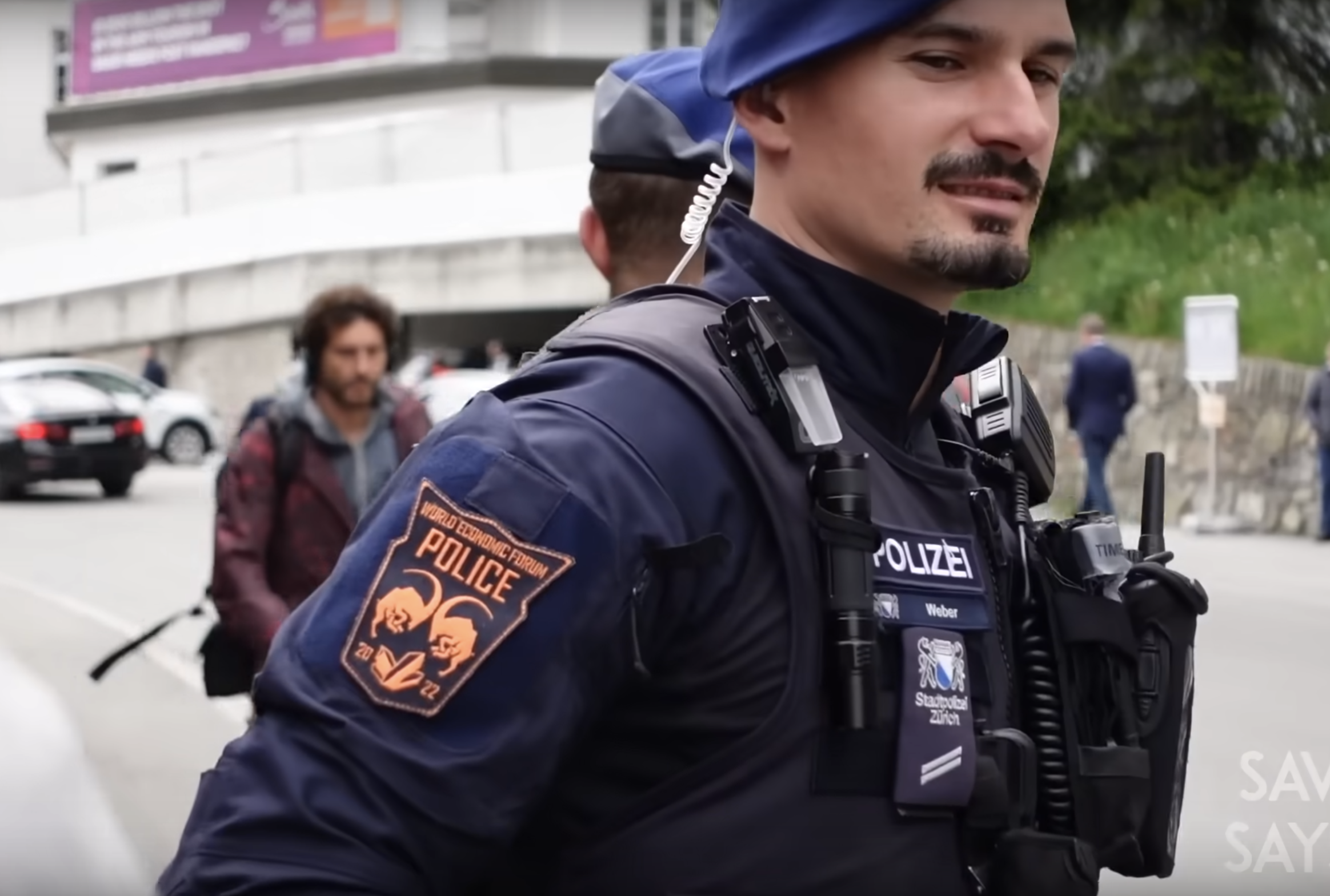
In contrast, it is those of us who fail to comply with these higher forces — the so-called ‘anti-Science anti-Vaxxers’ — for whom the laws of man have been made, and the more who die from the judgement of Science, the harsher will be the laws made by our governments. It is not for us, however — the unbelievers — that the totalitarian regime has been made, but for the COVID-faithful. If indeed there is a purpose and not merely opportunism and negligence on a global and historical scale that deserves the description ‘unprecedented’, we cannot say yet what the purpose is of what numerous reports fear is the permanent damage to the immune systems and even disruption to DNA repair in the billions who willingly or under threats to their livelihoods have been injected with this experimental biotechnology. But we can say that, like the totalitarianisms of the Twentieth Century, the global biosecurity state is intent on fashioning a new mankind in the Twenty-first Century, if not medically then psychologically, socially, culturally, legally and politically, the institutions of which all now operate in the service of the higher authority of Science according to the ideology of biosecurity. There was no shortage of transhumanists promoting their latest product at this year’s annual meeting of the World Economic Forum, but pride of place should go to its Founder and Executive Chairman, Klaus Schwab, who at the Chicago Council on Global Affairs held in May 2019, a year before the ‘pandemic’ was declared, announced that: ‘At the end, what the Fourth Industrial Revolution will lead to is a fusion of our physical, our digital and our biological identities’.
3. Ideological Thinking
How this higher authority is constituted as a Nature that justifies genocide, or a History that justifies slave labour, or a Science that justifies lockdown is, of course, the work of ideology. For Arendt, ideology is not merely the political, legal and cultural superstructure of a given society, but the third defining characteristic of totalitarian government, which solves a problem arising from the total domination of a population. Just as the laws of a constitutional government have a purely negative function, setting limits to actions rather than inspiring and guiding them, so terror is not sufficient to determine the behaviour of those who live in a totalitarian state. But since the goal of totalitarianism is to eliminate our capacity for action as it does our capacity for judgement, it substitutes, for a principle of action, our preparation to play the role of executioner or victim of the judgement of Nature, History or Science. This preparation is the function of ideology. What Nature was to National Socialism and History was to Soviet Communism, Science is to the global biosecurity state. The former is the higher authority of a single idea on which the rule of terror is implemented, the latter the ideology through which that rule is applied.
It is a characteristic of ideologies within a totalitarian state that they claim to explain everything by deduction from a single idea. In this respect, organised religions were the prototypes for totalitarian ideologies, and God the idea to which every higher authority aspires. But today, when Science has replaced God as the highest authority of Western secular societies, ideologies always claim to be scientific in their methods, whether they’re formulating a discourse of race, or class, or — as in our own time — disease. That Science is the religion of the global biosecurity state is merely the apotheosis of the unquestionable character of the single idea from which all totalitarian ideologies derive their authority, and which enables them to explain not only the present but also the past and the future. Orwell expressed this in 1984 with the famous dictum: ‘Who controls the past controls the future. Who controls the present controls the past.’ Ideology is the logic of the idea as it unfolds in history; and in that unfolding, the idea is transformed into a first premise from which everything — and indeed anything — can be deduced. This unfolding is the process of logical deduction that totalitarianism substitutes for our human capacity for thinking. All ideologies have this character to a greater or lesser extent — with capitalism, for example, deducing the entire history of humanity from man’s supposedly inherent competitiveness and desire for supremacy over others — but only in totalitarian regimes is the function of logical deduction without thinking fully revealed. ‘War is peace. Freedom is slavery. Ignorance is strength.’ The lines inscribed above Orwell’s Ministry of Truth are not the lies of a one-party state free to contradict itself in its own slogans; they are the logical deductions of ideological thinking in a totalitarian system that has returned today with slogans every bit as unthinking in the perfection of their logic. Obedience is freedom. Censorship is truth. Thinking is a crime.
According to Arendt, there are three elements peculiar to all ideological thinking that are specifically totalitarian. First, in their claim to total explanation, ideologies are always oriented towards history. Even when proceeding from the premise of Nature, as did the ideology of National Socialism, race served to explain the movement of history, which it thereby reduced to an expression of Nature.
Second, ideological thinking is independent of all experience, from which it can and must never learn, deduced as it is from the higher authority of the idea concealed behind perceptible reality, which only the ideology allows its adherents to perceive. Today, the evidence of our own bodies is denied for the higher authority of Science, which through the fraudulent use of the PCR test has fabricated the truth of ‘asymptomatic transmission’, which has effectively turned COVID-19 into a disease without symptoms. And as we are seeing with the almost total colonisation not only of our work practices but also of our leisure and pedagogical practices by the orthodoxies of woke, ideological indoctrination is the primary purpose of institutions within a totalitarian regime. As I discussed in chapter 6, the propaganda of totalitarian movements works to dissociate thought from experience and reality, for which it substitutes a hidden meaning which reveals itself only to the indoctrinated. And like woke, whose ideologues see and denounce an ‘ism’ in everyone not compliant with their ideology, as soon as a totalitarian movement comes to power it changes reality to fit its ideological claims. Perhaps the most telling example of this ideological thinking is the declaration, which all politicians, civic leaders and public figures must now repeat if they are to hold office or retain their position, that a biological male is legally female if he declares himself to be a woman.
And third, since ideological thinking does not have the power to transform reality — to turn a man into a woman, a positive test into a disease, lockdown into a non-medical intervention, a face mask into a barrier to viral transmission, or gene therapy into a vaccine — its advocates and adherents must bring about the emancipation of thought from reality through methods of deductive demonstration. To this end, ideological argumentation deduces from its first premise free from interference by experience, or evidence, or reality. Thus, the overwhelming evidence of the ineffectiveness and harms of masks, lockdown and COVID-19 ‘vaccines’ have done nothing to halt the demands by the COVID-faithful for their re-imposition. On the contrary, the greater the evidence for their dangers, the louder the ideologues of biosecurity call for their enforcement as part of their attempt to transform reality in accordance with their ideology, to turn a man into a woman simply because — indeed, precisely because — they have said so. If the sudden dictatorship of trans-ideology over our politics, laws and culture has an explanation, it is in the power of the new totalitarianism to transform woke ideology into a weapon with which each citizen of the global biosecurity state can bring him, her, them, em, xem, per, ver, hir, aer or faer self into line with the rule of terror.
What distinguishes the ideologies of totalitarianism from the previous ideologies of dictatorial, tyrannical or despotic regimes is that the ‘idea’ of the ideology is not its most important aspect. The most important aspect is the logical process deduced from the idea. Indeed, in the process of its realisation, the original basis on which the individual ideology made its appeal to the masses — whether that was saving the German nation from a Jewish conspiracy, emancipating Russian workers from the Tsarist autocracy, or saving the entire world from a deadly viral pandemic — is devoured by that process. Just as Germany under Hitler was reduced to ruins and Soviet workers had fewer freedoms under Stalin than they had under the Tsars, so global lockdown has killed more people and caused far more damage than COVID-19 could ever have done outside the fantastical predictions of its ideologues. But it is in the nature of ideological politics, Arendt argues, that the real content of the ideology that realises the idea in the world is devoured by the logic with which the idea is carried out.
In preparing the population to be either executioners or victims of the idea, and sometimes to be both in succession, the principle of action in a totalitarian ideology is not the ideology itself — whether racism or dialectical materialism or biosecurity — but its inherent logicality. According to this deductive logic, which requires of its adherents nothing more than to suspend their capacity to think, if A is true then B must also be true (in logical notation: A→B); and if B is true then so too is C; and if C is then so is D, all the way down the alphabet to whatever conclusion is desired for total domination. We don’t have to look at the absurdities of the Moscow Show Trials of the 1930s or the Jewish conspiracy of Bolshevik bankers with which the German public was terrorised for examples of the coercive force of such logical deduction and where it can lead. It is by what Arendt calls ‘the tyranny of logicality’ that we have surrendered our inner freedom to think just as we have surrendered our freedom of movement. And to counter the possibility of anyone thinking, which is the opposite of the compulsory process of deduction, the self-coercive force of logicality is increased as the grip of totalitarianism tightens.
Today, having convinced the populations of the West to comply with an experimental programme of mass injection for a disease that presents no more of a threat to our health and medical infrastructure than seasonal influenza, the increase in heart attacks is being blamed on everything from solar storms, melting ice caps, gardening, napping too much, warm weather and a poor diet to a healthy diet, cold weather, skipping breakfast, drinking less alcohol than the NHS recommends, cannabis-use in the young, E-cigarettes, binge drinking, the stress of watching football, shaking a duvet too vigorously, shower habits, rising energy bills, physical activity, depression, an unnamed ‘stealth disease’ and, of course, COVID-19. By the same deductive logic, the climate crisis is now the cause of everything from two days of hot weather in the UK to house fires and the rise in the cost of living. At the same time, reports on the causal connections between, on the one hand, mRNA injections and myocarditis and pericarditis in the young and healthy and, on the other, the trillions of dollars of money printed since September 2019 and our spiralling inflation, are dismissed as conspiracy theories by the ideologically indoctrinated.
The hegemony of ideological thinking has the effect not only of concealing the actions and absolving of responsibility the actual agents of the observed ‘crisis’ — the individuals, companies and governments responsible for, respectively, pollution, inflation and the excess deaths — but also of making each individual personally responsible for saving the planet, reducing inflation and combatting the virus by their individual actions. This, inevitably, entails the personal and willing sacrifice of our individual freedoms: not only our freedom of movement, assembly, association, privacy and expression but also, and primarily, the sacrifice of our freedom of thought. Indeed, this self-coercing force of deduction is the necessary complement to the compulsion of total terror, the success of which can be measured by the extent to which people have lost contact not only with each other but also with the reality of the world around them. Arendt writes:
‘The ideal subject of totalitarian rule is not the convinced Nazi or the convinced Communist, but people for whom the distinction between fact and fiction (i.e. the reality of experience) and the distinction between true and false (i.e. the standards of thought) no longer exist.’
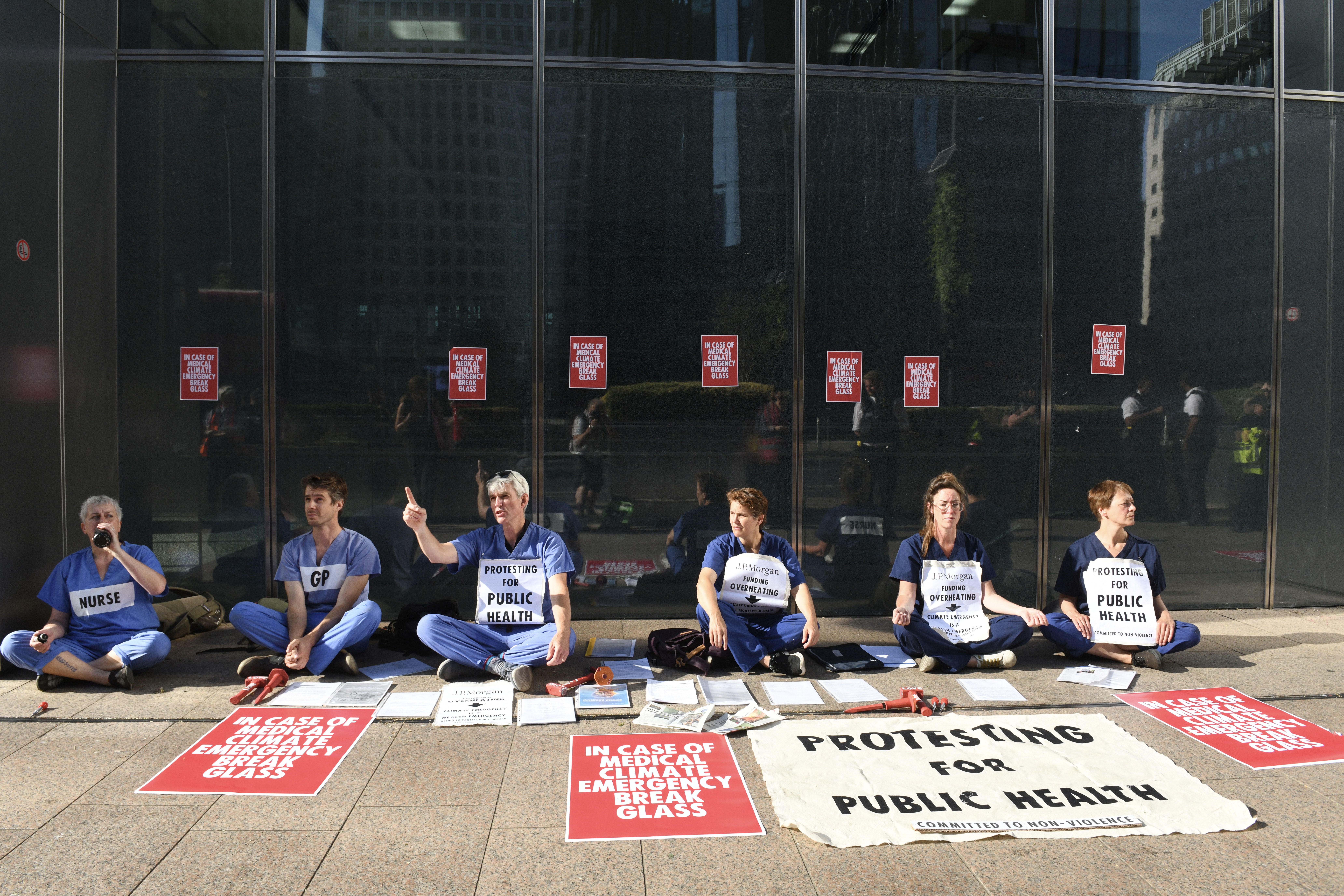
As I argued in the previous section on the moral collapse in the West during the two years of the politically-declared ‘pandemic’, the global biosecurity state has succeeded in producing just such a subject as its ideal citizen, whose ideological deductions from a first premise are not confined to the regulations and programmes of biosecurity. In a recent protest by Doctors for Extinction Rebellion, held on 17 July after the UK Health Security Agency had declared a ‘heat emergency’, medical professionals broke the windows of the office of JP Morgan Chase, the international financial services and investment bank in London’s Canary Wharf. Their stated justification for doing so followed the following chain of deduction, which began with the by-now familiar premise that:
-
- Global warming is increasingly because of man-made climate change;
- The primary cause of climate change is fossil fuels;
- JP Morgan is the world’s biggest financier of fossil fuels;
- The two days in which the UK was predicted to have temperatures of 40 degrees Celsius are proof of this climate crisis;
- Climate crisis is a health crisis that threatens life on earth;
- Medical professionals sign a code of conduct that includes the obligation to: ‘Act without delay if they believe that there is a risk to patient safety or public protection’;
- Patients under their care, including those suffering from dementia and mental stress, will die as a consequence of this two-day ‘heatwave’;
- Therefore, it is the obligation of medical professionals to do all they can to stop the causes of this ‘health crisis’.
The question of whether the earth is warming up because of human actions or because of a natural cycle of climate change is outside the parameters of this chapter; although I have written before about the attribution of climate change to the abstract figure of ‘man’ rather than to capitalism. And one might question why medical professionals who obediently, repeatedly and without question or protest continue to inject experimental ‘vaccines’ into millions of UK citizens as young as five while ignoring the overwhelming evidence of their threat and damage to health and life are now so concerned about their code of conduct when they have ignored their Hippocratic oath to ‘first do no harm’ with far more immediate and devastating consequences than their predictions about the effects of two days of hot weather. We might also wonder about their willingness, in the wake of two years of lockdown restrictions, to so readily use the by now familiar language of ‘health’ and ‘emergency’ to advertise their protest, and ask whose agenda their protest is furthering. Nor do they appear to be interested in drawing attention to the investment of JP Morgan and other international financial institutions in development programmes like Agenda 2030, to which just about every government of the member-states of the United Nations has signed up without consultation with their parliaments or populations; or to the influence such institutions have on the organisations of global governance they form, and which increasingly dictate the policies of our democratically-elected national governments. And why should they, when it’s precisely these programmes XR has been formed to promote? Indeed, the ease with which protests on privately-owned land under some of the most extensive surveillance and strictest laws in the world gain unimpeded access to the property of some of the most powerful and protected corporations in the world raises the question of how and why XR are able to circumvent not only the private security arrangements of these companies but also the attentions of the Metropolitan Police Service, Transport for London and the UK’s own security services. As someone familiar with the surveillance, attention and actions the police give to protests in this city, my only explanation is that, since XR are furthering the agenda of crisis capitalism, the global technocracies pushing this agenda have told the London Mayor, the Metropolitan Police Service and every other institution of civic order in the UK and other Western nations to back off. Totalitarian governments have always been adept at mobilising the masses into the spectacle of ‘The People’, whether in organised marches or in spontaneous protests, in order to further their total control over the isolated and lonely individuals who, through their willing participation, imagine and are encouraged to believe that they constitute just such a political body, such a force for change towards a single great ‘idea’.
My point in quoting the arguments of these protests by XR here, however, is less to take issue with the factual content of their claims than to show how ideology functions to create, from a first premise derived from a widely accepted idea, an unbreakable chain of logical deductions that require no thinking from those who repeat and follow them to their seemingly logical and unavoidable conclusion, and which demand and justify extreme actions. A similar chain of deductions started from a similarly unexamined but widely accepted first premise:
-
- Germany is in decline because of foreign influences on the Aryan people;
- The primary cause of national decline is the international banking system;
- Jews are the most powerful bankers in Germany;
- Hyperinflation in the 1920s and the Great Depression in the 1930s are both proof of the national decline;
- Financial crisis is a political crisis that threatens all of Germany;
- Politicians swear allegiance to the German nation and must act without delay if they believe there is a threat to the safety of the state and people;
- People under their governance, including Germans of Aryan blood living in poverty, will die as a consequence of the financial crisis;
- Therefore, it is the obligation of politicians to do all they can to stop the causes of this financial crisis.
Of course, there were other chains of deduction, including the influence of Russian Bolshevism, that the ideology of National Socialism drew from the decline of Germany, just as the environmental crisis is being used to further the rise of totalitarianism justified by the coronavirus crisis. But we all know where this ideological thinking led the German politicians who wanted to save the German people from the Jewish conspiracy of Bolshevik bankers. Of course, it should be clear from the previous chapters that I am in no way defending the actions of JP Morgan Chase and the other institutions responsible for the financial crisis of September 2019 that required the lockdown of the Western world six months later, both of which are the primary causes of the current inflation. And there is a world of difference between the windows of Jewish-owned businesses and synagogues smashed across the Third Reich on Kristallnacht in November 1938 and the windows of the international banks offering their investment and laundering services in the financial capital of the world. But there is a parallel between the deductive logic from a first premise that leads an Extinction Rebellion doctor to smash the windows of a bank and a National Socialist stormtrooper to smash the windows of a Jewish-owned business.
The collaboration of the medical profession in the manufactured health ‘crisis’ has shown that doctors and nurses are skilled technicians and nothing more, and with very few and honorable exceptions do not have the time, the education, the disposition or the intellectual capacity to make judgements about the efficacy, necessity or consequences of restrictions and programmes that have laid the foundations for the global biosecurity state. The absurd elevation of the profession in the eyes of the general public to the final arbiters of our politics and laws has undoubtedly gone to the heads of many of its members, not least the teary-eyed acolytes sitting hand-in-hand outside JP Morgan, and Extinction Rebellion has been quick to utilise this newly-accorded status in the service of their own agenda to promote the crisis capitalism I discussed in chapter 4. In this respect, although the ideology of environmental crisis preceded that of biosecurity, the latter replicated the former’s logical deductions to arrive at conclusions with even greater consequences for the politics, laws and cultures of the neoliberal democracies of the West. No-one will be unfamiliar with this chain of deductions, every one of which has been proven to be either factually false or logically inconsequent — none of which, of course, has done anything to alter the apparently irrefutable argument they form in the minds of the indoctrinated:
-
- Coronavirus is a new pathogen constituting an unprecedented threat that, if not stopped, will kill 40 million people globally in the first year alone;
- The virus is transmitted from person to person via surfaces, aerosols and droplets;
- Asymptomatic transmission is the primary driver of infection, so everyone is a potential threat to the lives of others;
- The huge numbers of infections and deaths recorded with a positive PCR test are proof of the virulence and fatality rate of the virus;
- The public health crisis is a pandemic that threatens the world;
- Citizens have an obligation to sacrifice their freedoms and rights for the greater good until the health crisis is over;
- People will die if we don’t all obey the regulations and programmes of biosecurity, including social distancing, mandatory masking, contact tracing, swab testing and lockdown restrictions;
- Only mass vaccination of the entire population of the planet will allow governments to remove these restrictions and build back better to the new normal.
Just as this chain of deductions without thinking led us, in just two years, to the global biosecurity state, so too the environmental crisis, whose deductive logic, so far, has been almost universally adopted by the governments, civic institutions and private corporations of the West, will continue far beyond its current conclusions. Even as I write, global warming is being used to form a chain of deductions that, in their furtherance of totalitarian domination, parallel those of the global biosecurity state when it made injection with experimental gene therapy a condition of citizenship. Indeed, it is in the imminent programmes of Universal Digital Identity, Central Bank Digital Currency, Universal Basic Income, Social Credit, Environmental, Social and Corporate Governance, Sustainable Development Goals and all the other programmes of Agenda 2030 that the deductions from these respective crises will meet in a new and properly totalitarian world order in which the entire natural world will be monetised and converted into financial capital. The more the two ideologies converge, the more they divest themselves, as Arendt said, of the ideas they claim to realise, whether that’s saving us from a deadly virus or saving the planet from us, both of which are devoured by the logic of totalitarian domination. Every argument that starts with the terror of a crisis and then uses it to justify coercive action does so in order to circumvent critical thinking; and whether the signs are those of the UK Government displayed on the podiums from which they announced biosecurity regulations to the nation for two years or those of Extinction Rebellion laid out on the pavements from which they continue to stage their promotions of Agenda 2030, their aim is to form an unbreakable chain of deductions that obviates and indeed precludes our capacity for thinking.

4. Isolation and Loneliness
Finally, the fourth characteristic of totalitarian government identified by Arendt are the subjective experiences produced by a form of governance whose essence is terror and whose principle of action is the logic of ideological thinking. The first of these is the isolation of individuals from and against each other, which often marks the beginning of terror and is always its result. Isolation transforms the class solidarity in which the worker found collective agency against the exploitation of capitalists into the masses in which fascism binds the population together under the false unities of nation, state and obedience to the leader. Indeed, Arendt identified the transformation of classes into masses, which was the explicit goal of Italian fascism, with the consequent elimination of all collective solidarity, as the necessary condition of total domination. For terror can only rule absolutely over individuals who are isolated and therefore powerless to act together, and is, therefore, pre-totalitarian.
The individual produced by the masses of modernity was the man of the crowd, alone among the thousands of people on the street in a city of many millions; or the worker in the factory, repeating over and over his single contribution to the process of mechanical production, as alienated from his own labour as he was from his fellow workers, and from which he found solidarity in the consciousness of his class and the organisations by which that consciousness threatened to become a political force. It was precisely this that fascism sought to destroy. But totalitarianism went a step further, with loyalty to workers’ unions supplanted by obedience to the so-called workers’ party — something we see today with in unquestioning support UK unions give to the Labour Party, no matter how neoliberal its policies. Today, though, the masses no longer exist on the street — which outside the spectacles of democracy have been all but banned to spontaneous manifestations of collectivity by the privatisation and policing of public space — but in the equally privatised and policed space of the online world. To date — though doubtless even more efficient technologies of isolation await us — there is no better demonstration than social media of how the World Wide Web produces the isolated and politically impotent individual.
However, while isolation in the political sphere has always been a fundamental characteristic of all forms of tyranny, totalitarianism also produces, within the sphere of social interactions, loneliness. These two experiences, Arendt explains, are not the same:
‘While isolation concerns only the political realm of life, loneliness concerns human life as a whole. Totalitarian government, like all tyrannies, certainly could not exist without destroying the public realm of life, that is, without destroying, by isolating men, their political capacities. But totalitarian domination as a form of government is new in that it is not content with this isolation and destroys private life as well.’
It’s hardly necessary to say how accurately this passage describes the increasingly explicit goals of the global biosecurity state. If the creation of the masses as isolated individuals has been the product of the online world to which the global technocracies are restricting as much of our social and political interactions as possible, from business, commerce and entertainment to education, health and what remains of public debate, loneliness has been the deliberately produced result of biosecurity ‘measures’ that have justified the atomisation of each citizen from each other, exacerbating our fear of and distance from the world. Indeed, the digital and virtual replacement of the phenomenal and actual world of our five senses and lived experience is the stated goal of the technological companies that have modelled the global biosecurity state on the online world.
Our resulting loneliness, which has increased significantly since lockdown was imposed in March 2020, is a product of the experience of feeling oneself superfluous to the world, and with it of losing one’s capacity for thought and experience: both our sense of ourselves and the world in which we previously lived with others. In this respect, loneliness, which has been the experience of the modern masses since the First Industrial Revolution when workers’ actions were taken from them as alienated labour, and was sharpened in the Twentieth Century under the abstract and incomprehensible rule of finance capitalism, prepared man for totalitarian domination by purging him of his capacity for thinking. As Arendt writes:
‘The only capacity of the human mind which needs neither the self nor the other nor the world in order to function safely, and which is as independent of experience as it is of thinking, is the ability of logical reasoning whose premise is self-evident.’
In what appears to be a reference to Orwell’s Nineteen Eighty-Four, which had been published only four years before, Arendt argues that, deprived of that common sense with which we share the world with other human beings, the isolated and lonely individual falls back on the truism that ‘two and two equals four’, which appears like the last place in which to stand in a drowning world where nobody is reliable and nothing can be relied upon. But this, she says, is an empty truth, or rather no truth at all, since it reveals nothing. Only the deductive logic of ideological thinking leads its adherents to the conclusion that — in an echo of Orwell — sometimes it equals five.
From this experience of political isolation and social loneliness derives the characteristic extremism of totalitarian movements, whose ideological thinking — despite its claims to radicalism — always leads its adherents to the worst possible conclusions. Whether that’s the civilisation-threatening virus proclaimed by the COVID-faithful or the imminent environmental catastrophe proclaimed by the acolytes of Extinction Rebellion, totalitarian thinking continues to rely on catastrophe as the principle of action. As numerous news platforms reporting on grass fires in Southern Europe during the two days of hot temperatures in July unanimously declared, this was a ‘heat apocalypse’; and any attempt to point to the temporary area of low-pressure off the coast of Portugal drawing hot air from North Africa, or the contribution of residential development in forested areas to the artificial build-up of brushwood and other potential sources of fuel, is denounced as ‘climate change denialism’.
This is where totalitarian governments step in. In a broadcast televised in March 2020 denying her government’s intention to impose lockdown restrictions, the Prime Minister of New Zealand, Jacinda Ardern, who has since become one of the most zealous implementers of the global biosecurity state, warned the individual members of a national population that would subsequently be isolated from each other and cut off from the world for longer than almost any other nation in the West about listening to rumours and disinformation. In a statement that would not look out of place in the mouth of O’Brien in Nineteen Eighty-Four, Ardern instructed the citizens whose rights and freedoms she was about to remove for the better part of two years not to listen to any source of information other than her Government:
‘Dismiss anything else. We will continue to be your single source of truth. Take everything else you see with a grain of salt. Remember that, unless you hear it from us, it is not the truth. We will continue to provide everything you need to know.’
But, we might ask with Winston Smith in our online Room 101, how can we help seeing what is in front of our eyes? Two and two are four. Sometimes, is the response we’ve learned to accept from our governments. Sometimes, if the pharmaceutical companies say otherwise, they are five. Sometimes, if the Fact Checkers tell us, they are three. And sometimes, when the global biosecurity state says so, they are all of them at once. We are slow learners, but we’re learning how to think ideologically. Follow the Science. Asymptomatic transmission is the primary driver of viral infection. My vaccine helps protect you. Your human rights end where mine begin. No-one is safe until everyone is safe. We will own nothing and be happy.
Arendt’s final comments in her text, whose historical and political context was the Cold War and her fears for the future, are both a warning of the return of totalitarianism as a ‘potentiality’ and an ‘ever-present danger’, and the hope — if that is what it still is — that totalitarian domination ‘bears the germs of its own destruction.’ The danger for us, seventy years later, is not that the new totalitarianism of the global biosecurity state will establish a permanent world — for no world, not even a totalitarian one, lasts forever — but that it threatens to ravage a world ‘in which everywhere seems to have come to an end’ before the chance of a new beginning rising from this end, and contained within it, has a chance to germinate. This beginning, which Arendt says is identical with the freedom of man and born again with each of us, is what totalitarian domination seeks to eradicate by making humans superfluous to the form of its governance. As the ascendance of the camp as the biopolitical paradigm of the state demonstrates, this superfluity of humanity is at the heart of the post-human technologies and programmes of the Fourth Industrial Revolution.
Simon Elmer
Architects for Social Housing
Collections of articles by the same author about the UK biosecurity state :
- Virtue and Terror: Resisting the UK Biosecurity State (May-October 2021)
- Brave New World: Expanding the UK Biosecurity State through the Winter of 2020-2021 (October 2020-March 2021)
- COVID-19: Implementing the UK Biosecurity State (March-August 2020)
Architects for Social Housing is a Community Interest Company (no. 10383452). Although we occasionally receive minimal fees for our design work, the majority of what we do is unpaid and we have no source of public funding. If you would like to support our work financially, including the research for these articles, please make a donation through PayPal:

 Simon Elmer
This image turned up in one thread I have been following:
“Monkeypox can live on door handles and toilet seats for 120 years and can infect anyone from 5 miles away.
“Without wishing to sound alarmist it’s certainly time to panic now” said a UCD expert with a degree in journalism but who once read a really good book on virology.”
Naturally the “Fact checking” sites laid into it. And it struck me that the image may have been a “false flag” to “justify” increased clamp down on the internet. But even then, the image has a marvellous sting of humour that has been altogether absent from all mainstream media discourse for over two years now. And the quip about the degree implies – correctly – that journalism is the main thing in itself now and virology is just a tool.
But it is the total absence of humour in the media that is the concern. Because this lack is totally anti-human. And it seems to me to be unsustainable. Surely the dam is about to burst?
LikeLike