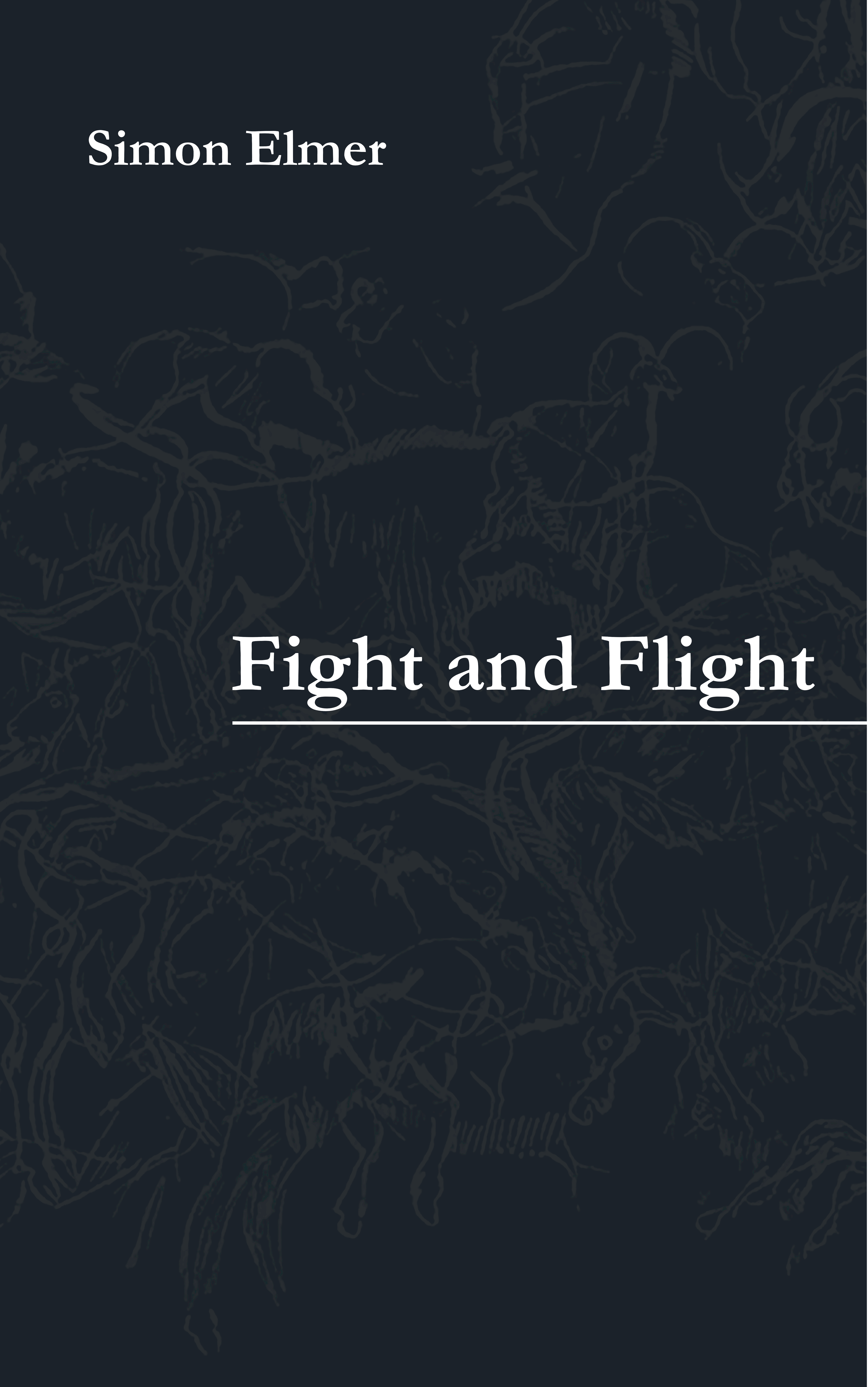
 Fight and Flight: Poems 2012-2023
— 29 August, 2023
by Simon Elmer
Paperback £15.00
Hardback (forthcoming)
Look Inside







‘A luminescent and transporting first volume. Its range, depth and nuance — formally, thematically, cognitively and emotionally — are exceptional. It’s a work I’ll find myself returning to. And quoting!’
— Steve Venright, author of The Least You Can Do Is Be Magnificent
‘I have enjoyed the diligently beautiful and elegantly crafted philosophical fury of the wise Fight and Flight.’
— Taren McCallan Moore, Quip & Curiosity
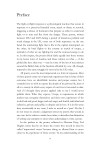
Preface
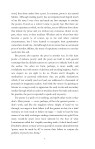
The fight-or-flight response is a physiological reaction that occurs in response to a perceived harmful event, attack or threat to survival, triggering a release of hormones that prepare us either to stand and fight or to turn and flee from the danger. These poems, written between 2012 and 2023 during a period of disastrous political and social change in the UK, come out of both responses: on the one hand, the unrelenting fight that is life in the capital, interrupted, on the other, by brief flights to the country in search of escape, a reminder of what we are fighting for and the renewed energy to do so. In this respect, the poems divide fairly equally into those written in my home town of London and those written on what — if the global elite have their way — may be some of the last of my journeys around the British Isles in the freedom afforded by a car. All, though, respond to the same struggle for survival in the UK today.
All poetry, even the most impersonal, is a form of exposure. Most of these poems come out of personal experiences that in some of their outcomes have an identifiable location and proper names; but I certainly have no wish to expose the details of my private life, least of all to a society in which every aspect of our lives is harvested as data. And if I thought these poems applied only to me I would never publish them. What they expose, I hope, is experiences in which readers may recognise themselves and their own experiences of the world, bad and good, happy and sad, angry and fearful, individual and collective, private and public, in despair and in love. It is in this sense that, occasionally in my verse, I refer to myself as a ‘poet’. By this I do not mean to assume a judgement about my poems that would, in any case, be for others to make; but, rather, to describe that dimension of writing one attempts to enter when undertaking to write a poem.
In the preface to the poems collected in Moortown Diary, Ted Hughes wrote that he set down the events they record in what he called ‘improvised verses’ because doing so allowed him to move closer to his experience of those events.1 In my understanding of the word, that alone makes him a poet. In contrast, prose is my natural habitat. Although reading poetry has accompanied and shaped much of my life since I was a boy and made my first attempts to emulate the poems I loved, as a writer I came to poetry late. But there are certain experiences which, on the surface, are no different from those that initiate my prose and yet, without any conscious choice on my part, select verse as their medium. Whether and in what form they become a poem is, of course, up to me and other, external circumstances; but I have learned to recognise their germination somewhere inside me. And although I am no more than an occasional poet of modest abilities, the muse of experience continues to cast her seeds into this soil.
But poetry also exposes the poet in another way. In this least poetic of nations, poetry (and the poet) are held in such general contempt that the default reaction to a poem is to ridicule both it and the author. No other art form, perhaps, is more readily and confidently met with snorts of derision and mocking laughter. And in one respect we are right to do so. Poems aren’t thoughts or meditations or personal reflections: they are public declarations which, if not actually read out loud, are addressed to thousands of potential (or imaginary) readers. And while the viewer of a painting or listener to a song is ready to appreciate the early works and secondary studies through which an artist or musician learns his trade and creates his practice, the poet is expected to speak only in poetry.
For poetry is a spell or it is nothing, and spells either work or they don’t. Most poems — even, perhaps, all but the greatest poems — don’t work; and like the magician whose sleight of hand we see through, our anger at their failure is all the greater in that, for a brief moment, we were ready to believe in magic — ready to hear the base matter of our daily exchanges undergo transmutation into gold. How many would-be poets have been silenced by the fear of what Lautréamont called the ‘stupidly mocking smile of duck-faced man’? Doubtless almost as many as have quoted his counter admonition that ‘poetry must be made by all’ to excuse their failure to conjure the goddess of poetry into being.2
So why publish these occasional and modest verses — in every one of which I hope there is something of poetic value, but for only a handful of which would I claim the magic of a spell? Vanity, undoubtedly, if by this we mean the desire to communicate with and be recognised by our fellow human beings at a time when our isolation from each other has become the object of a global biopolitical strategy, and love for anything other than Big Brother is condemned in advance. But also because of the silence with which the violence and lies of the last decade have been met, not only by poets but also by writers, artists, musicians, playwrights, actors, filmmakers and all the other remunerated practitioners in the UK culture industry — the most cowardly of whom have offered their services as noisy propagandists for state and corporation. Poetry is a collective word for what the globalists trying to reduce our lives to eco-austerity within a maximum biosecurity prison want to eradicate from our lives. If we turn our back on poetry, we turn our back on freedom, and our lives will be led by lies. We live in days, as Yeats described his a century ago, that are ‘dragon-ridden’; and the silence of contemporary poetry, which disgusts me as much as the collaboration of poets, is what many of these poems were written to shatter.3 Not as a sorcerer, then, but as a sorcerer’s apprentice, this is my book of spells, and only by publishing them will I find out which ones work.
A small handful of these poems are what Eliot called ‘five-finger exercises’, whose charms, perhaps, are apparent only to myself.4 I include them here, nonetheless, in the hope they may charm others. Several of the poems have been written ‘after’ other poems or songs. Following the more common examples of the latter, I call these ‘covers’; but, rather than keeping the lyrics and changing their musical arrangement, I have kept the form of the verse and rewritten its contents with the intent that the former will add context to the latter.
In his book on Rimbaud, The Time of the Assassins, Henry Miller observed that the great writers of the Nineteenth Century had a prophetic quality.5 How well does Nietzsche’s image of the ‘last man’ describe the masked and obedient citizen of today’s biosecurity state, patiently awaiting commands on his smartphone?6 I can’t claim any such prophecy; but although I hope my poems show some development in their craft over the past decade, I have not started this volume, as poetry books typically do, with my ‘best’ or latest effort. My intention, rather, and one of my reasons for publishing these poems, is to follow the stages of our descent into this abyss of compliance and stupidity. All my poems, therefore, are presented here in chronological order, together with the date of their composition and the place in which they were written or, at least, started. As a former art historian, it’s my belief that much of the meaning of a work lies in the time and place of its making, and so it is with my own attempts.
At the end of the volume, somewhat in imitation of Hughes, I have added notes to many of the poems, containing the sort of thing I might say to introduce them to a listening audience. Some of the poems are dedicated to the friends who inspired them or with whom I associate them. Poetry, like every art, is made not in isolation but within a community of readers and listeners, and this is my gesture of recognition and thanks to mine.
I have collected these poems here as a companion volume to my Notes to Poetry, which I published earlier this year. If one has the temerity to comment on the poems of others, one should at least have the courage to offer one’s own to the same.
Endnotes
- Ted Hughes, Moortown Diary (Faber & Faber, 1989), p. x.
- Isidore Ducasse, Maldoror and the Complete Works of the Comte de Lautréamont; translated and with an introduction by Alexis Lykiard (Exact Change, 2004), pp. 192 and 244.
- W. B. Yeats, ‘Nineteen Hundred and Nineteen’, 1921; collected in Yeats’s Poems; edited and annotated by A. Norman Jeffares, with an appendix by Warwick Gould (Palgrave, 1996), p. 315.
- T. S. Eliot, The Complete Poems and Plays; edited by Valerie Eliot (Faber & Faber, 1969), p. 135.
- See Henry Miller, The Time of the Assassins: A Study of Rimbaud (New Directions, 1956).
- Friedrich Nietzsche, Thus Spoke Zarathustra: A Book for Everyone and No One; translated, with an introduction, by R. J. Hollingdale (Penguin, 1969), pp. 46-47.
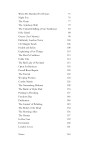
List of Contents
Preface | The Nation’s Favourite Poem | The Lesson of the Toad | Love and Desire | Resolution | New Left Revue | Class | I Test | 20 Questions | Thatcherwocky | The Poet and the Architect | Badger Hunting | Imperfect Love | Cley Marshes | Midwinter Spring | Tube Strike | Something | The Multicultural Anthem | Portrait of the Poet as a Dead Badger | A Dead Badger | Walk into this Forest | Monk Wood | Penberry | Friendship is the Death of Love | My Bicycle | Wystman’s Wood | A Disappointment of Rainbows | The Passenger | The Ode Less Travelled | When We Marched For Homes | Night Fox | The Chain | The Aylesbury Wall | The Unlawful Killing of Ian Tomlinson | Holy Island | Greece (An Odyssey) | Definitely London Town | On Margate Sands | Health and Safety | Explaining a Few Things | The Devil’s Cauldron | Edale Vale | The Red Lady of Paviland | Open for Business | Powell River Report | The Eternal | Weeping Woman | Combe Martin | The Nuremberg Defence | The Battle of Hyde Park | Parking in Fletching | Freedom Day | Dedication | The Cantref of Pebidiog | The Burial of the Dead | The Morning After | The Hunter | In Her Care | Extremism | London Loves | South Winds | Notes
About the Author
Simon Elmer was born and lives in London. In 2002 he received his PhD in the History and Theory of Art from University College London, and he has taught at the universities of London, Manchester, Reading and Michigan. In 2015 he co-founded Architects for Social Housing, for which he is Head of Research. His books include The Colour of the Sacred: Georges Bataille and the Image of Sacrifice (2007); The Road to Fascism: For a Critique of the Global Biosecurity State (2022); Virtue and Terror: Selected Articles on the UK Biosecurity State, Vol. 1 (2023); The New Normal: Selected Articles on the UK Biosecurity State, Vol. 2 (2023); and Notes to Poetry (2023). Fight and Flight is his first collection of poetry.
Publication Details
Publisher: Architects for Social Housing (August 2023)
Distributed by Lulu Press, UK
Language: English
Hardback and paperback: 192 pages
ISBN 978-1-4467-7297-3 (clothbound)
ISBN 978-1-4467-7298-0 (paperbound)
Dimensions: 8 x 5 inches (20.2 x 12.7 cm)
A Guide to navigating your purchase on Lulu without using PayPal:
- Click on the links above for either a hardback or paperback copy.
- Click ‘Add to Cart’.
- Click on the shopping-cart symbol in the top-right of your screen.
- Check the number of copies and click ‘Continue to Checkout’.
- Ignore ‘Express Checkout: PayPal’.
- Fill in contact information (e-mail and shipping address). Click ‘Continue to Shipping’.
- Select Shipping Method. Click ‘Continue to Payment’.
- Ignore the PayPal option. Fill in your Credit Card details. Select Billing Address. Click ‘Pay Now’.
- Lulu will then send confirmation of your order to your e-mail address. Be sure to check your Junk Mail folder.
 Simon Elmer
21 thoughts on “Fight and Flight: Poems, 2012-2023”