If someone would poke out the eyes of the hawks
we sparrows could dance wherever we please!
xxxxxxxxxxxxxxxxxxxxxxx— Han-Shan
The Filipino mother whose children
Live with their father in the Philippines,
Walks the Chinese child through Hong Kong’s streets,
The bag of her employer’s dirty laundry
Carried in one hand, in the other
The hand of her Chinese employer’s child,
Teaching him the English of US conquest
She was raised to speak fluently from birth.
At the supermarket where she buys the food
Her employers employ her to buy for them,
She knows the price of every overpriced good
On whose purchase she could live for a week,
And her family for a month; and which
Her employers will consume that evening
In the meal that she will cook for them
And from which she will eat the remains.
Only after her employers have retired
For the night does she make up her makeshift bed
In the kitchen of the flat in which she works,
In the laundry room or on the balcony
Of the home in which her employers live,
And in which she is obliged by law to live
With the dog they bought from the pet shop
And which she walks for them every evening.
Like it, she was picked from a broad selection
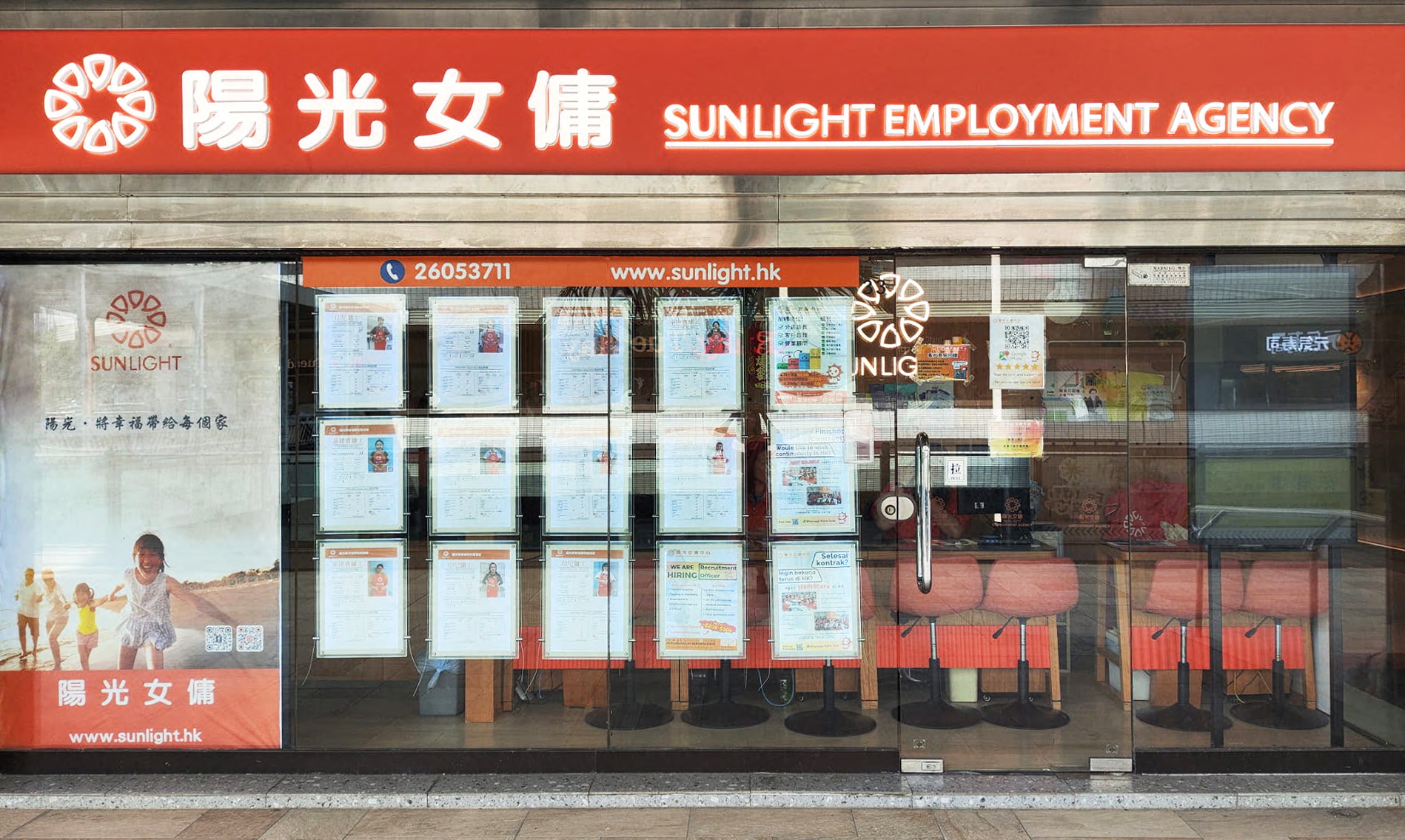
Put on display in the agency window:
Pretty ones by the financial advisors,
The less attractive by their jealous wives
Who beats her when she arouses her husband
Who beats her when she refuses his desires,
On threat of return, an unwanted parcel,
To the seller she still owes for being sold.
Across her face, in the supermarket queue,
There is not the slightest shadow of a smile
As she pays with her employers’ credit card
And keeps the receipt for their inspection.
Only, when the child that is not hers responds
To the wave of my hand or smile on my face,
Does she smile, at last, in spite of herself,
In this city of masks that never smile.
But behind her mask I hear the question
Unasked in every swallowed smile. Is there
Someone like her looking after my child,
Sleeping in my home, shopping for my food,
While her children and husband wait to receive
What she saves from her pitiful salary,
Unloved, unmothered by her servitude
To people too busy to raise their own child?
On Sunday she gathers with her sisters
In cardboard cities they construct for the day
And engage in acts of mutual affection,
A pedicure or platting each other’s hair:
Four hundred thousand immigrants living
In involuntary celibacy,
A community of women without men
In a city without community.
They play music, trade goods only they would buy,
Laugh out loud, talk to each other and smile,
As the Hong Kongers pass by silently,
Eyes on their smartphones, plugs in their ears,
Designer shopping bags clasped in their hands,
Blind to the servants who serve a city
Where the only thing you can’t buy is a smile
And everything else has a bargained price.
Not every Filipino woman
Or waitress in every Western bar,
Every servant fired from her position,
Every dog-walker walking after dark,
Is looking for a Western husband
Who is looking for an Asian woman
To tell him the latest rate of exchange
In the streets of Central, the bars of Wan Chai.
This is the grimace of capitalism
This is the marketplace for commodities
This is the trade in human bodies
This is the price of the human soul
This is the indenture of voluntary slaves
The buying and selling of sex and flesh
This is the brothel in which we live
This is the bank we have made our home.
— Hong Kong, February 2025
• • • • •
The Market Place supermarket chain, which is a subsidiary of Robinsons Retail Holdings Inc., the second largest retailer in the Philippines, has an outlet built into the ground floor of Island Crest, perhaps the ugliest building in Sai Ying Pun and certainly the most intrusive, occupying an entire block between First Street and Second Street east of Centre Street. It is staffed by Filipino women and frequented by Westerners, Hong Kongers with a taste for Western food, and the domestic servants who do their shopping.
In Hong Kong, agencies that monopolise the employment of foreign domestic workers display photographs of their faces in the windows of their agencies, so that prospective clients can pick them according to their likes and dislikes. Information about the workers includes their nationality, height, age, marital status, Chinese and Western star-signs, and the number and location on their bodies of any tattoos. Despite the threat of being deported, there are numerous reports of the abuse of these workers, including unwanted sexual advances by the husbands and physical beatings by the jealous wives, withholding of their salary, confiscation of their property, overworking, forced prostitution and far worse, mostly in wealthy Chinese households. I should add that the only former domestic worker I have spoken to told me her employers, who were from Europe, treated her well.
The epigraph is from a poem by the T’ang Dynasty Buddhist poet and hermit known as Han-Shan, or the Master of Cold Mountain, who is thought to have lived through the late-Eighth and early-Ninth centuries in the Tiantai Mountains, a holy range stretching along the seacoast in the Zhejiang Province of China, where he wrote his poems on rocks.
 Simon Elmer