I shall wait for my friend, compose a poem and dance in play.
— Matsumushi (early-15th Century)
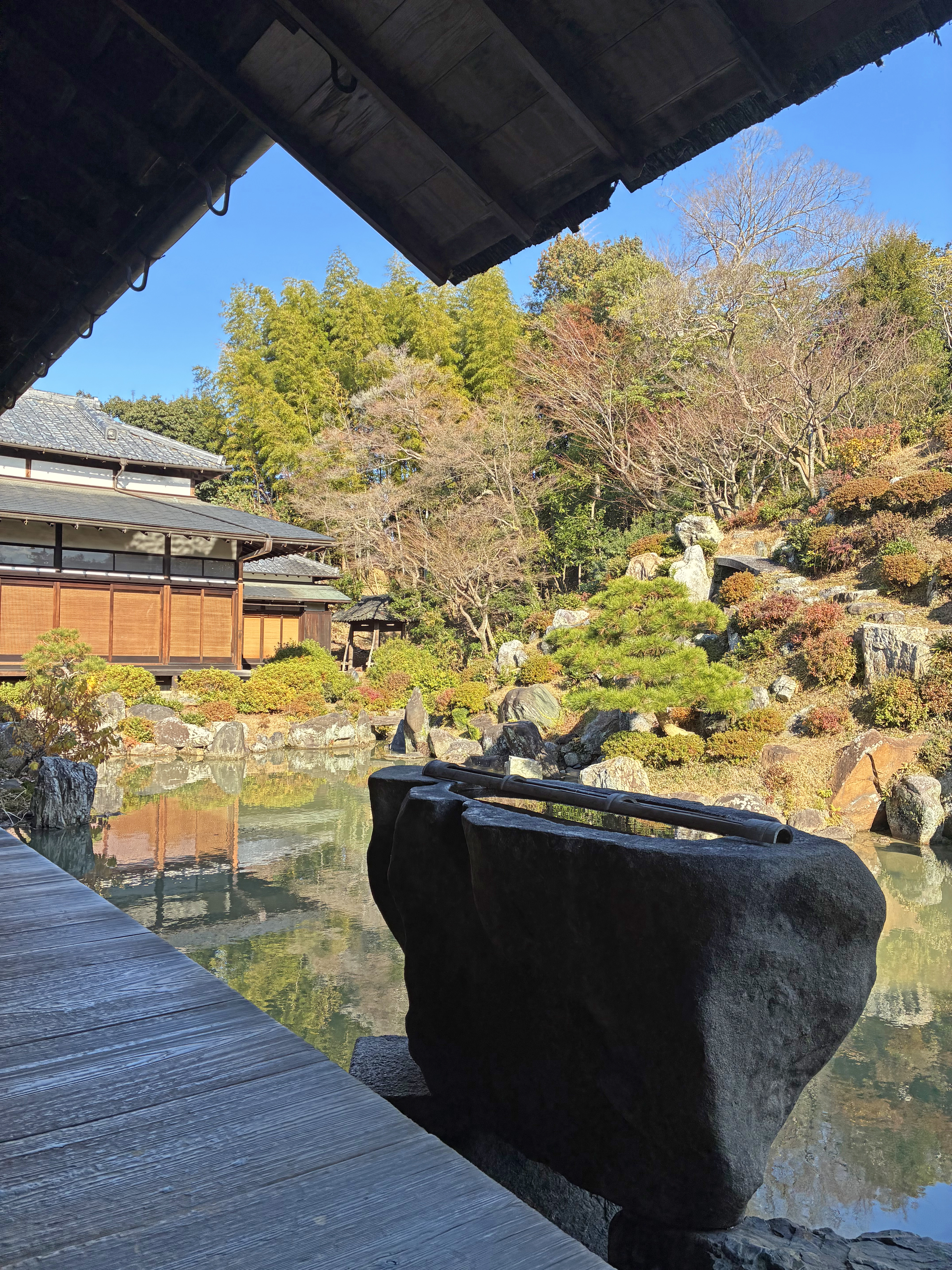
Winter sun on a wind-rippled pond
Waves of light break on the shadowed eaves
A garden daubed with autumn’s last brush.
— Kyoto, December 2025
• • • • •
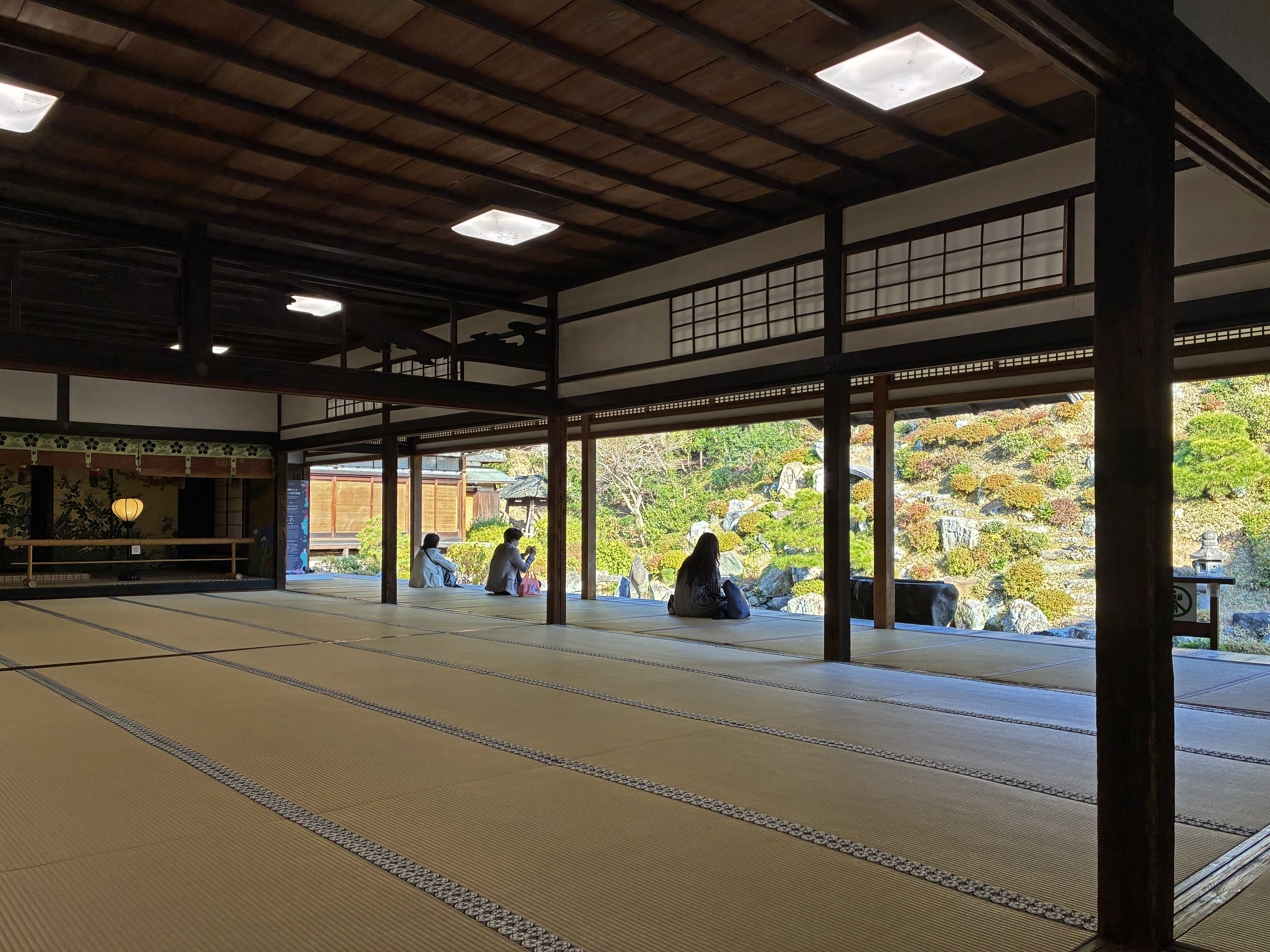
Sen no Rikyū was a Japanese tea-master from the Sixteenth Century who, under the patronage of Toyotomi Hideyoshi, the Kampaku (関白) or Imperial Regent and second ‘Great Unifier’ of Japan, became the most important influence on the ceremony of Chadō (茶道) or ‘Way of the Tea’, in which he emphasised rustic simplicity, directness of approach and honesty of the self. His favourite garden was said to be that in Chishaku-in (智積院), a Shingon Buddhist sub-temple of Negoro-ji (根来寺), a temple complex on Mt. Negoro, south of Osaka. The complex became so powerful, however, with some 450 temples defended by 10,000 warrior monks, that in 1585 Hideyoshi razed Negoro-ji to the ground. It was only following Hideyoshi’s death in 1598 that the new Shōgun, Tokugawa Ieyasu, granted land and permission to rebuild Chishaku-in in the Higashiyama area of Kyoto.
Founded in 1601, ten years after the death of Rikyū, Chishaku-in still exists today, having been built many times over. Since Japan lies at the convergence of four tectonic plates and has over 2,000 active faults, its buildings are constantly being rebuilt after earthquakes and fires, and temples are dated to their founding rather than their construction. For the Japanese, therefore, the garden in Higashiyama, which was created in 1674 and has been restored and replanted over the last 350 years, is the same one that was beloved of Sen no Rikyū, and which he may have helped design, on Mt. Negoro. In December 2025, we visited Chishaku-in, whose main hall had been destroyed by fire in 1947 and rebuilt in 1975. The garden, which we viewed from the veranda of the Ōjoin or Grand Drawing Room, was composed of an artificial hill raised before a pond crossed by tiny stone bridges, and arranged with rocks, plants and a miniature pagoda, to represent the sacred Mt. Lu (Lushan) in China.
The epigraph is from the fifteenth-century Noh play, Matsumushi (pine cricket), which was written either by Zeami Motokiyo, who under the patronage of the Shōgun, Ashikaga Yoshimitsu, became one of the most influential figures in Noh theatre, or by his son-in-law, Konparu Zenchiku. The play takes place in autumn in Abeno, which today lies in the perfecture of Osaka. The translation is by Kawamura Haruhisa, a third-generation Noh master of Kyotoʼs Kawamura Noh Theatre, who performed the role of the shite (シテ) or spirit, wearing a four-hundred-year-old mask, in the performance we attended in December 2025. The play makes reference to the Kokei San-shō, or ‘The Three Laughers of Tiger Ravine’, a Chinese legend symbolising China’s three main belief systems, Daoism, Buddhism and Confucianism, that takes place in Mt. Lu in the Fourth Century, and which was introduced to Japan during the early Muromachi period (1392–1573).
 Simon Elmer